
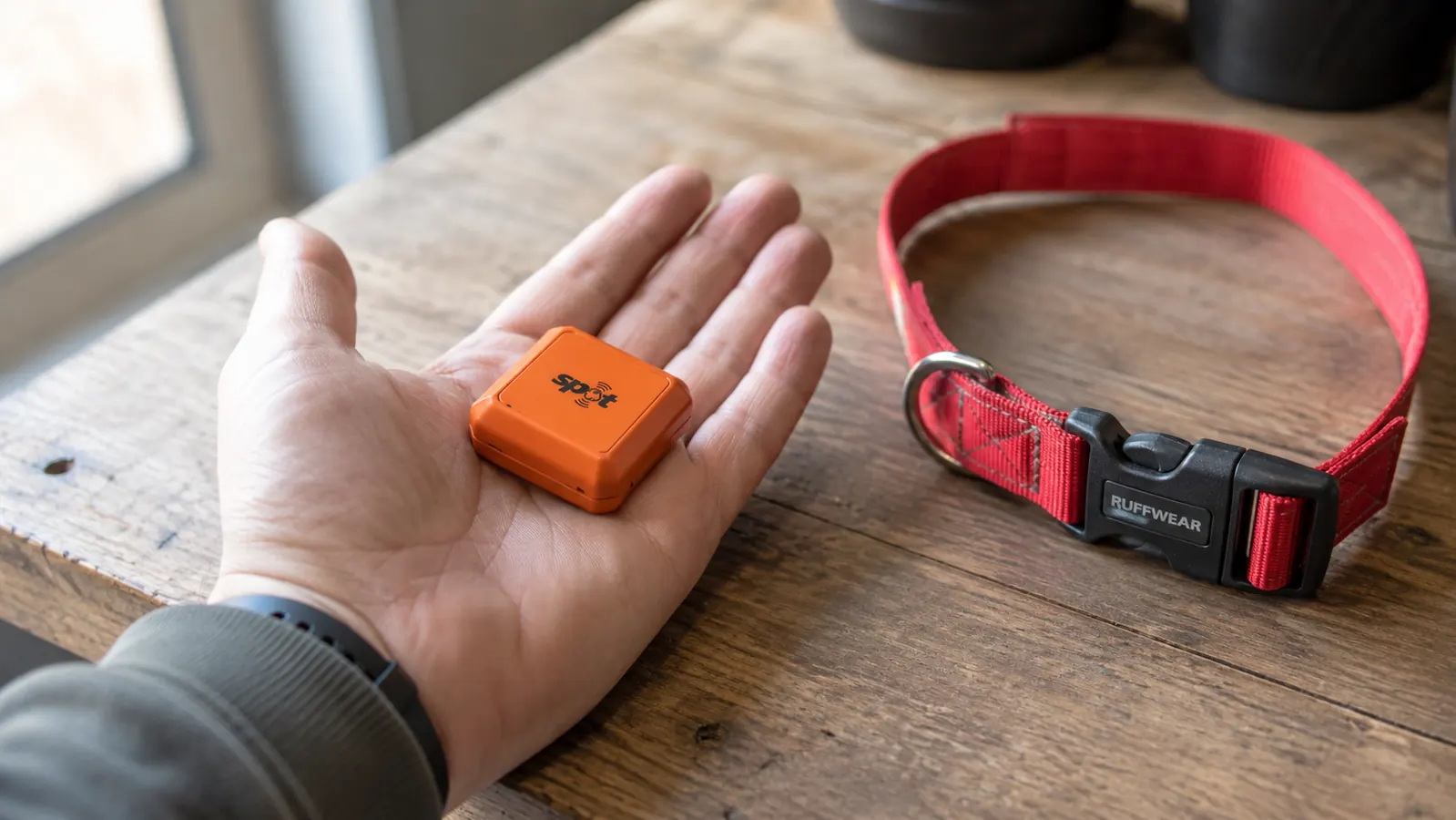
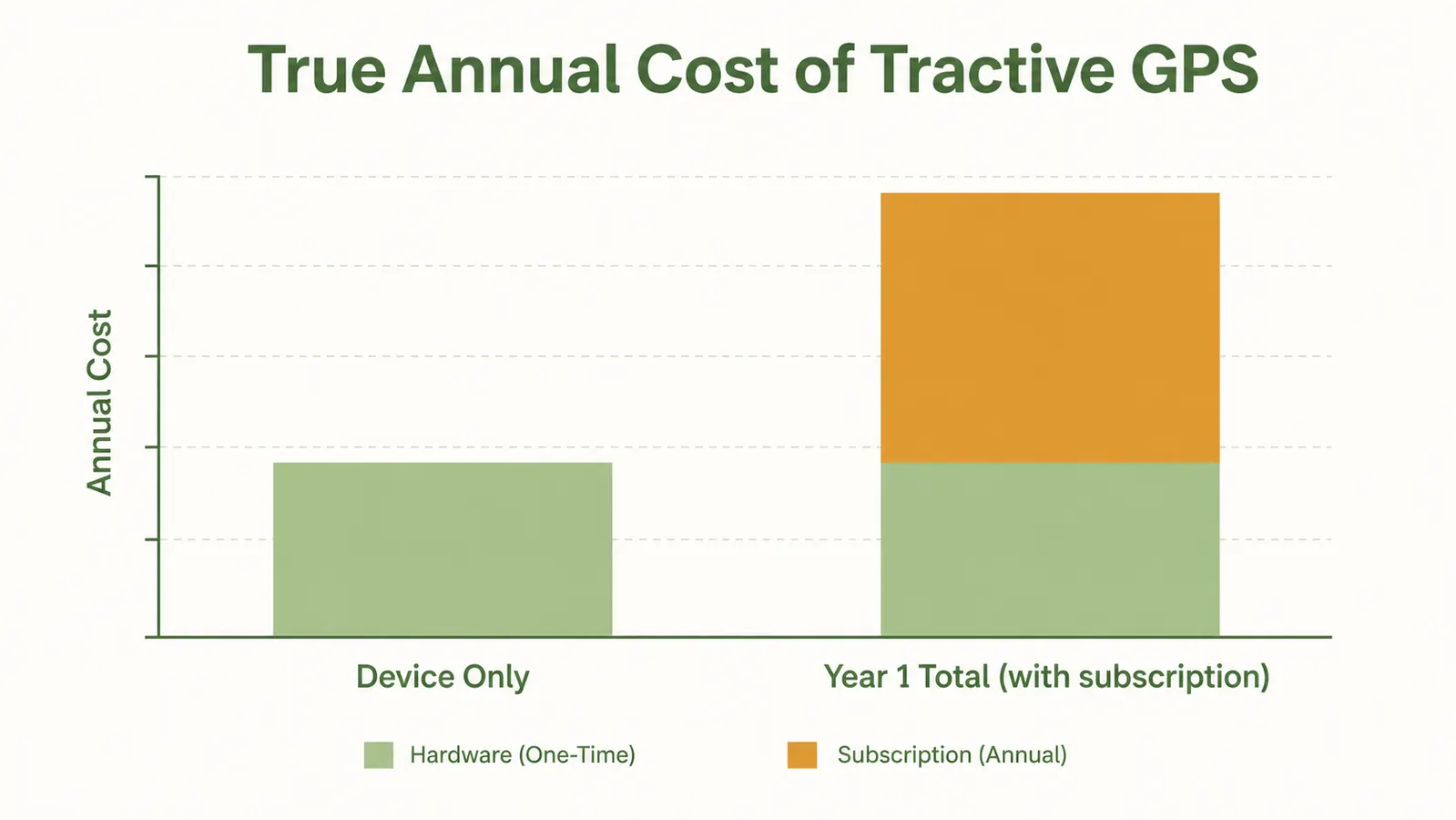
Let me start with the thing the Amazon listing does not say loudly enough: the Tractive Smart Dog GPS Tracker does not work without a paid monthly subscription. Not in a limited way. Not with reduced features. It does not work at all. The device is hardware only. Every live ping, every escape alert, every map update runs through Tractive's cellular data network, and that network costs money every single month. When you are browsing the product page and see the device listed at its current price, that number is just the entry fee. The real ongoing cost is the subscription layered on top of it. I want you to know that going in, because I did not, and I had a mildly unpleasant surprise when I set it up and hit a paywall before I could even see my dog's location for the first time.
That said, once I got past the subscription friction and actually started using the Tractive with my Corgi, Hazel, I came to a nuanced conclusion: it is genuinely good technology with specific real-world limitations that most reviews skip. This article covers those limitations in full, because I think you deserve to know them before you spend money. Hazel is a three-year-old Pembroke Welsh Corgi, about 26 pounds, with a strong herding instinct and an annoying habit of blowing past boundaries the moment she spots a squirrel. She has been wearing the Tractive for just over four months.
The Quick Verdict
Solid real-time GPS hardware let down by a non-optional recurring cost, short live-mode battery, and coverage gaps that rural buyers need to understand before purchasing.
Amazon Check Today's Price →You can't know if a GPS tracker will save your dog until you need it. That's the whole problem.
The Tractive GPS tracker has a 4.0 rating across 4,571 reviews. Check today's device price on Amazon and confirm your local LTE coverage before ordering.
Amazon Check Today's Price on Amazon →How I've Actually Used It Day to Day
Hazel wears the Tractive every day except bath days, when I take it off so it is not getting directly soaked with shampoo (it is IP67 rated and fine in rain, I just prefer not to soap up electronics unnecessarily). The tracker clips to her nylon collar through a purpose-built slot, and it has not slipped off or shifted position once in four months. I keep the app on a Pixel 7 and my husband has it on his iPhone. We both receive alerts and can both pull up the live map without either of us needing a separate account, which I appreciate.
Day to day, the tracker lives in what Tractive calls Power Saving mode. In that setting, the device checks in periodically rather than pinging continuously. The battery lasts well over a week in this mode, which means I rarely think about charging. I have it set to notify me when the battery drops below 20 percent, and that alert has fired fewer than a dozen times over four months. The day-to-day convenience is genuinely good. The problems surface when you flip from passive monitoring to active tracking, and that is exactly where I want to spend most of this article.
The Subscription: What You Are Agreeing To Before the Device Turns On
Here is what the setup flow looks like. You open the box. You download the Tractive app. You scan the QR code on the device. The app pairs with the tracker. Then, before you can see a single location update, the app presents you with subscription options. You must choose a plan and enter payment information. There is no trial period, no grace window, no basic free tier. The monthly plan is the most expensive per month. Annual plans bring that number down. A two-year plan brings it down further.
I am not saying this to be dramatic. I am saying it because when I bought the tracker, I mentally categorized it as a one-time pet gadget purchase, and I was wrong. It is a subscription service that happens to include hardware. Once I reframed it that way, the value proposition became clearer and I stopped feeling surprised by it. The recurring fee pays for Tractive's cellular data agreements with network carriers in over 175 countries. That global coverage is genuinely impressive and is the reason the Tractive works when you travel. But it comes with a real ongoing cost that adds up meaningfully over a year or two. Run the full math before you commit.
Battery Life in Live-Tracking Mode: The Number That Actually Matters in an Emergency
Standard mode battery life is excellent. I said that above and I will leave it there. What I want to dig into is live-tracking mode, which is what you actually use the moment your dog is gone. In live-tracking mode, the Tractive pings its location every two to three seconds. That continuous pinging is what makes the map feel like a real-time dot moving across your screen. It is also what kills the battery fast.
In my testing with Hazel, the battery in live-tracking mode runs out in roughly two and a half to three hours of continuous use. Tractive advertises up to 30 minutes of live tracking per day in their efficiency estimates, which is reasonable for the hardware they are running. But here is the scenario I want you to think through: you are hiking with your dog, something spooks her, and she runs. You trigger live-tracking to find her. Three hours sounds like a lot of time. But if you are in a large park, your dog is covering ground fast, and you are also burning your phone battery navigating, three hours goes by quicker than you'd expect. In most suburban escape scenarios, three hours is more than enough. For full-day off-leash adventures in remote areas, it is a constraint worth planning around.
The Tractive's virtual fence feature partially addresses this. When you draw a zone boundary in the app and Hazel crosses it, the device automatically switches from power-saving mode to live-tracking. That automatic trigger is smart design. It means you are not burning live-mode battery while she is safely inside the yard. The battery depletes only when you actually need the precision data. In practice, most escape situations resolve in 20 to 40 minutes of active live tracking, well within the battery window. But I think buyers deserve to know the ceiling before they are standing in a field at dusk hoping the battery holds.
The virtual fence is smart design. The battery only drains in live mode when your dog has actually crossed the boundary. The problem is when that happens somewhere the cell towers can't see.
Cellular Dead Zones: The Honest Conversation About Coverage
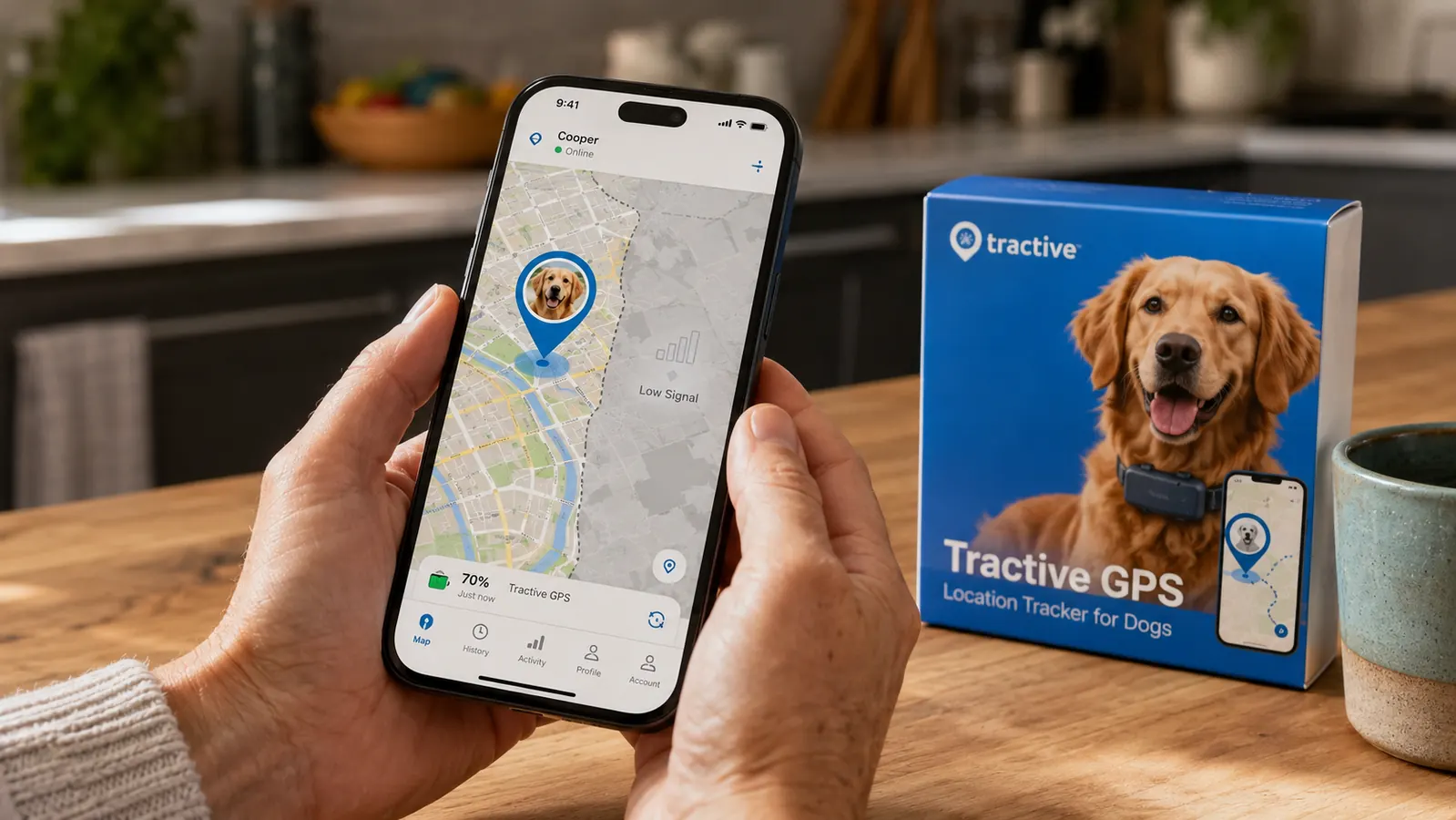
The Tractive's live tracking relies entirely on cellular network coverage. It connects via LTE-M, a low-power cellular standard well-suited for IoT devices. In urban and suburban areas with strong LTE coverage, this works exceptionally well. Location updates are fast, the map feels live, and the accuracy is within about 30 to 50 feet in my neighborhood.
In areas with weak or no cellular signal, the tracker goes quiet. It cannot fall back to satellite GPS the way a standalone GPS device would. It needs cell towers to transmit the location data to Tractive's servers and then to your phone. My in-laws live about an hour outside the city on a property with spotty LTE. I spent a weekend there with Hazel and the tracker and learned this limitation firsthand. In their backyard, which is forested and cellular-challenged, the app would show Hazel's last known position and then a spinning indicator. Location updates came in every 60 to 90 seconds in the best spots, and in the tree line behind the barn there were stretches where the app simply could not reach her at all.
This is not a flaw in Tractive's design, exactly. It is a fundamental constraint of using cellular infrastructure for real-time tracking. But it is information that matters a lot if you live rurally, hike in remote areas, or your dog runs into terrain with spotty coverage when it gets out. Before buying, I genuinely recommend checking LTE coverage maps for the specific areas where you most need this to work. The tracker is excellent in a well-covered suburban neighborhood and considerably less reliable in a dead zone at the moment you need it most.
Device Size: Does It Work on Smaller Dogs?
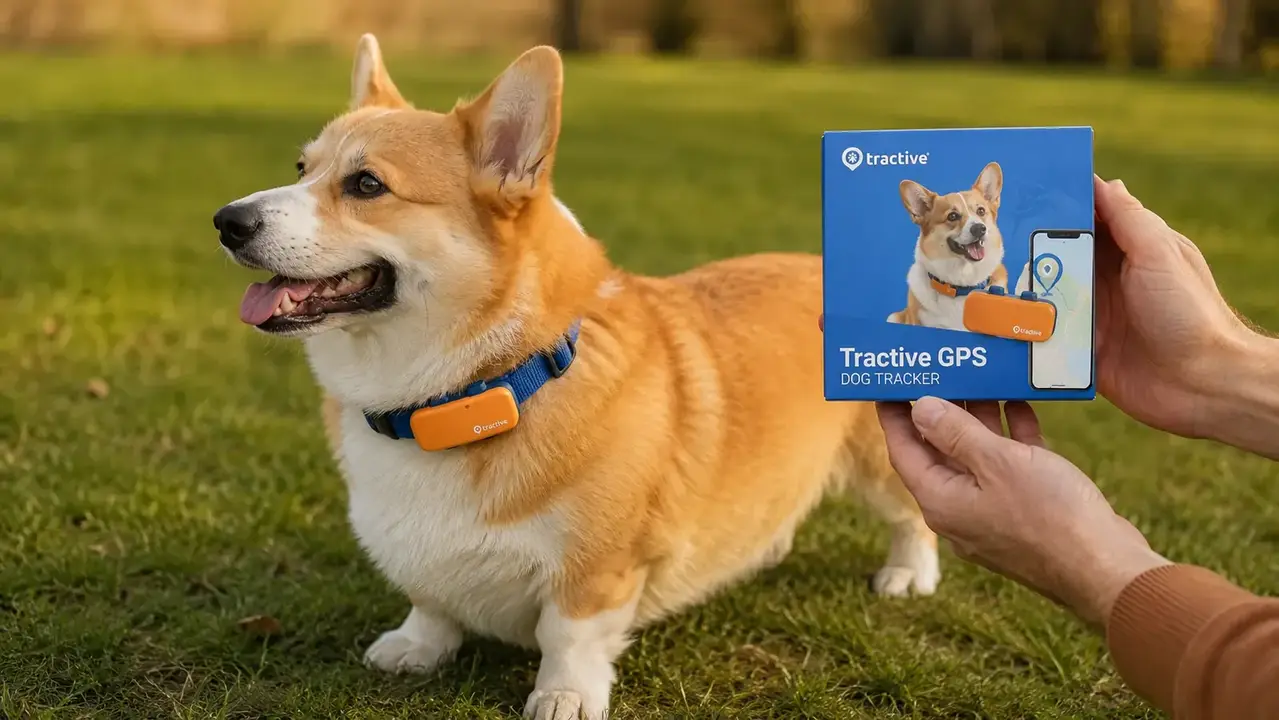
On Hazel at 26 pounds, the Tractive tracker looks proportionate. It is roughly the footprint of a large lighter and sits at a similar height. She ignores it entirely, does not scratch at it, and her movement and sleep patterns have not changed since I put it on. I cannot say the same would be true for dogs under 15 pounds. Tractive lists the minimum recommended dog weight at 9 pounds, but the device visually overhangs the width of a very narrow collar. On a Chihuahua or a tiny Dachshund, I think it would feel obtrusive. The device is also not designed for cats, despite some reviewers attempting it.
The collar attachment uses a fixed-slot mechanism. It works with flat nylon collars in standard widths but can be awkward to attach to very thin or very thick collars. I tried it on a spare 1.5-inch-wide martingale collar I had and it did not clip cleanly. Standard half-inch to one-inch nylon collars work without issue. If your dog wears a specialty collar, verify the width before ordering. Returning a GPS tracker is a friction-filled process compared to returning a bag of treats.
What the Device Gets Right
I want to be fair here, because this review has leaned into the caveats and the Tractive genuinely earns its 4-star rating where conditions are favorable. The setup process takes about ten minutes. The app is clean and intuitive. Family sharing means my husband and I both get escape alerts simultaneously and can see the same live map without paying for two accounts. That coordinated response capability matters when one person is at work.
The virtual fence is easy to draw, easy to resize, and triggers fast in good coverage areas. The activity tracking gives me a rough sense of whether Hazel has had a genuinely active day or a couch day, which is useful context for feeding decisions. Location history goes back 365 days on the premium annual plan. I have used it once to understand where Hazel went during a weekend when my husband was dog-sitting and she seemed extra tired on Sunday. Mild curiosity, but the feature worked. IP67 water resistance has held up through four months of rain, puddle-stomping, and one surprise creek crossing.
What I Liked
- Live location updates every 2-3 seconds in areas with strong LTE coverage
- Virtual fence auto-triggers live mode only when the dog leaves the zone, conserving battery
- Family sharing lets multiple people see the same live map without extra accounts
- IP67 water resistance holds up in normal outdoor weather
- Standard mode battery life exceeds a week on a single charge
- Works in over 175 countries, useful for travel
- Clean, intuitive app with 365-day location history on annual plans
Where It Falls Short
- No functionality at all without a paid subscription; there is no free tier or grace period
- Live-tracking mode drains the battery in roughly 2.5 to 3 hours of continuous use
- Performance degrades sharply in rural areas or locations with poor LTE coverage
- Device size may be disproportionate on dogs under 15 pounds despite the 9-pound minimum
- Proprietary magnetic charging cable means one more unique cord to track
- Collar attachment can be awkward with wider martingale or thick leather collars
- Total cost of ownership over one to two years is meaningfully higher than the device price alone
What I Would Tell You Before You Buy
If you live in a city or suburb with solid LTE coverage, you have an active dog that has actually bolted before (or you hike in areas where they could), and you are comfortable with a recurring subscription you budget for in advance, the Tractive is a genuinely useful piece of safety gear. I would have bought it earlier if I had understood it as a service purchase rather than a hardware purchase.
If you are in a rural area with iffy cell service, the coverage limitation is a real problem that no amount of enthusiasm for the technology solves. You would be paying monthly for a device that may not perform when you most need it. In that situation, I would rather know that upfront than find out in a field at dusk. Check your coverage first, genuinely, using the carrier maps that Tractive references, before spending a dollar on the hardware. And if the idea of a subscription for a dog tracker bothers you, there is no version of Tractive that avoids it. That is simply not the product this is.
Who This Is For
The Tractive GPS tracker is the right tool for owners of dogs that have actually escaped, for hikers who go off-leash in large parks where a dog can get out of earshot, and for households where two or more people need shared safety visibility. It is also worth considering if you travel internationally with your dog and want a tracker with broad carrier coverage. The subscription math is most justifiable when the stakes of a lost dog are high and the alternative is hours of panicked searching.
Who Should Skip It

Skip the Tractive if your dog has never escaped and your primary interest is casual activity monitoring. A fitness tracker designed for dogs handles that job without a cellular subscription. Skip it if you are in a rural area with genuinely poor LTE, where the tracker's core feature set is unreliable. Skip it if the recurring cost structure is a deal-breaker for you on principle, because there is no workaround. And skip it if your dog is small enough that the device size looks uncomfortable relative to their frame. There are more compact pet tracking options designed specifically for very small dogs and cats that suit those animals better. The Tractive is excellent for what it is. Know what it is before you buy it, and you will not be disappointed. Go in without that context, and the subscription prompt on day one is going to sting.
Know what you're buying before you open the box. Then decide if it's worth it for your dog and your situation.
The Tractive Smart Dog GPS Tracker has a 4.0 rating across 4,571 reviews. Check today's device price on Amazon and review the subscription options listed on the product page before ordering.
Amazon Check Today's Price on Amazon →