
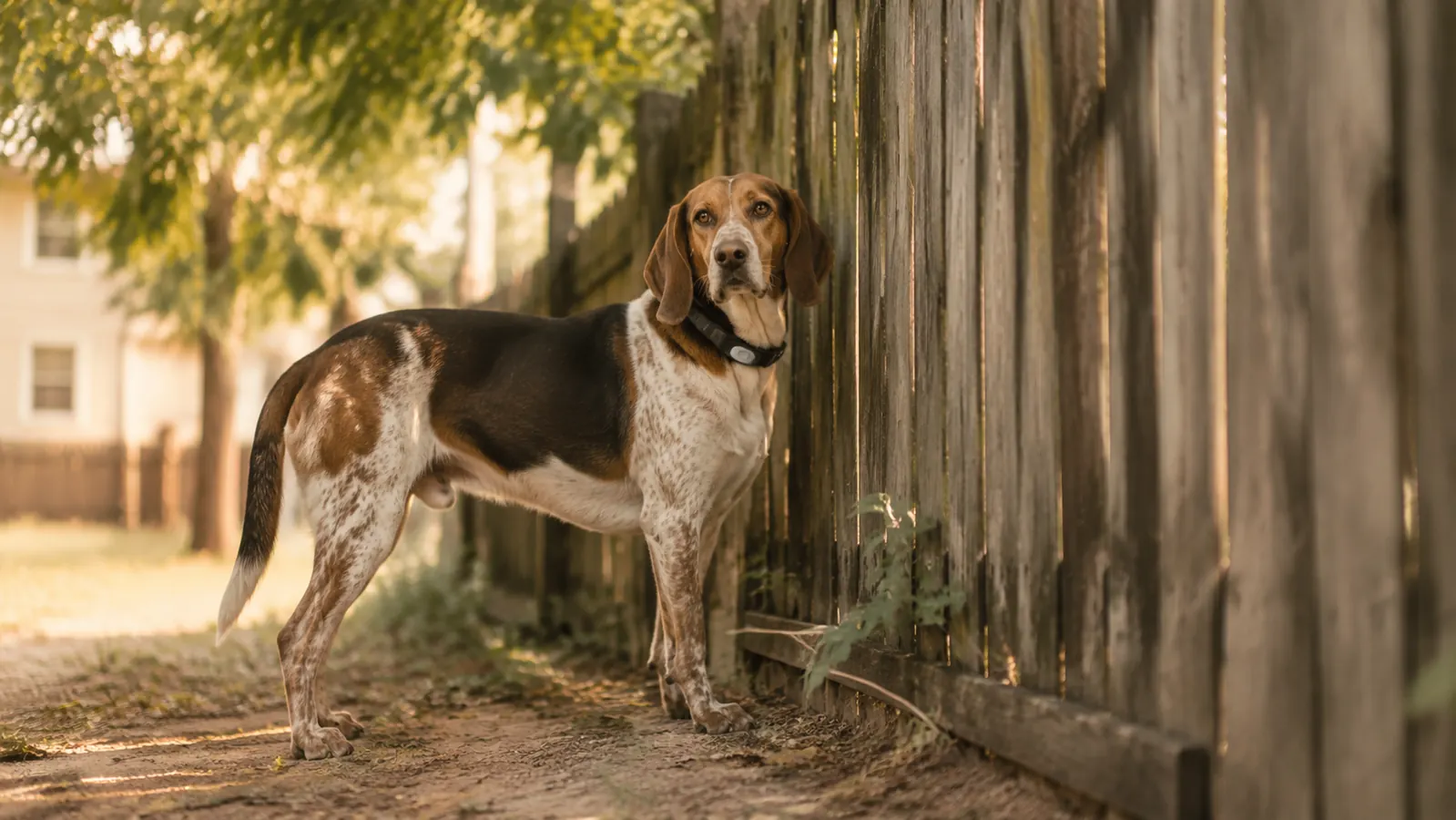
My Beagle, Daisy, has gotten out of the yard four times in the past year. I know this because I have exact timestamps from the Tractive GPS Smart Dog Tracker on her collar. Two of those escapes happened after 9pm, in the dark, when she slipped under a loose fence board and ran. Both times I had her location on my phone within ten seconds, and I had her back home within twenty minutes. I am telling you this upfront because it is the only context that matters for this comparison: if your dog escapes, do you want to know where they are right now, or do you want to know where they were the last time another iPhone walked past them?
That is the real difference between the Tractive GPS tracker and the Apple AirTag. Both are small devices that clip to a collar. Both send location data to your phone. But they work on completely different principles, and for a dog that actually goes missing, only one of them gives you a fighting chance of a fast recovery. I have spent five months with the Tractive on Daisy, and I have tested an AirTag on her collar for comparison during normal walks and park visits. Here is what I found.
| Tractive GPS | Apple AirTag for Dogs | |
|---|---|---|
| Tracking Technology | Live cellular GPS (2-3 second updates via LTE network) | Bluetooth + Apple crowd-find (passive pings from nearby iPhones) |
| Real-Time Location | Yes, anywhere with cell signal, continuously | No, location only updates when an iPhone passes within ~30ft |
| Rural / Wilderness Coverage | Works wherever your cell carrier has data service | Unreliable, requires nearby iPhone density to function |
| Subscription Required | Yes, required for all tracking features | None, included with device purchase |
| Device Price | Budget-friendly (hardware only) | One-time hardware purchase, no ongoing cost |
| Battery Life | 2-5 days typical; Live Mode drains faster | Up to 12 months (CR2032 coin cell) |
| Virtual Fence / Safe Zone Alerts | Yes, instant push notification when dog leaves set zone | No zone alerts, location only on manual request |
| Activity and Health Tracking | Yes, daily step count, sleep, and activity goals | No activity monitoring |
| Waterproofing | IP67, submersible to 1 meter | IP67, submersible to 1 meter |
Where Tractive Wins: Live Location and Zone Alerts
The Tractive works by connecting to the cellular data network, the same way your phone does. When Daisy moves, the tracker pings its position every two to three seconds and sends that to the Tractive app. I can watch a little dog icon move in real time on a map. When she crosses the virtual fence I drew around our yard, I get a push notification immediately. Not five minutes later, not when someone with an iPhone walks by the park. Right now.
That is a fundamentally different experience from any Bluetooth-based approach. When Daisy ran at 9:47pm on a Tuesday, there were no dog walkers in the neighborhood. There were no late-night iPhone users in the alley behind our street. There was nothing for a crowdsourced system to work with. The Tractive did not need any of that. It had cell signal, and that was enough. The app showed me she was three blocks east, at a dead end, sniffing a trash can. I grabbed her leash and had her home before I had time to panic. That recovery would not have happened with a Bluetooth device.
Daisy ran at 9:47pm on a dark Tuesday. No dog walkers, no late-night iPhones nearby. The Tractive did not care. It had cell signal, and that was enough.
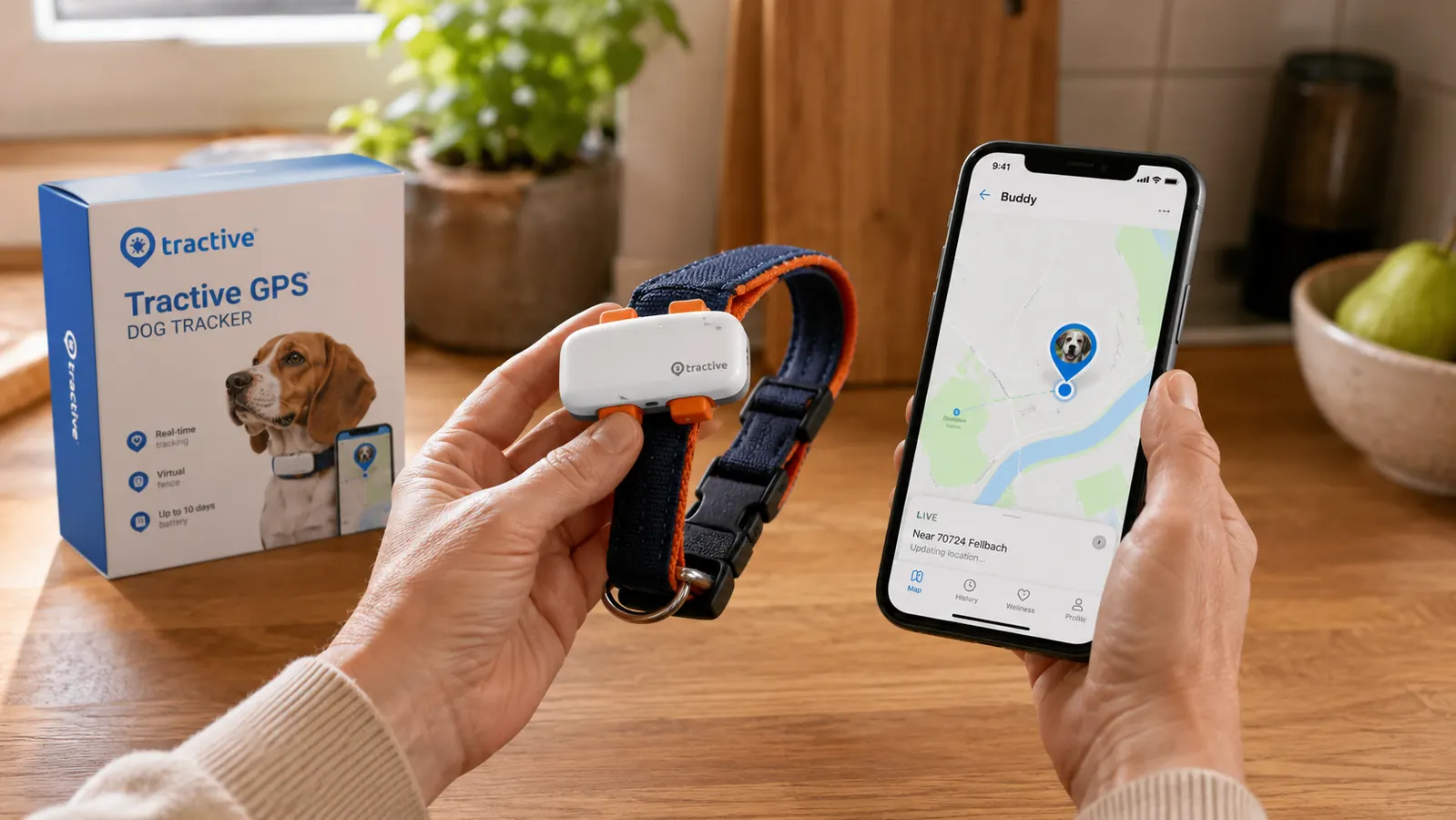
Where AirTag Wins: No Subscription and Year-Long Battery
The Apple AirTag has two genuinely compelling advantages, and I want to be straight with you about them. First, there is no subscription. You buy the tag and it works indefinitely without an ongoing cost. The Tractive requires a subscription to function, and you should factor that into your total cost before deciding. Second, the battery. A CR2032 coin cell in an AirTag can last up to a year before you need to swap it. The Tractive battery lasts somewhere between two and five days depending on how often it is pinging. That means charging every few days, and if you forget, your dog is untracked.
The AirTag is also lighter and smaller, which matters on small breeds. And if you have an iPhone and your dog mostly stays in a well-populated suburban neighborhood, the crowd-find network is actually fairly dense. I tested it on Daisy during a Saturday morning park visit in a busy residential area, and the location updates were reasonably frequent, sometimes only a few minutes behind. For a dog that wanders slightly and lives in a walkable urban neighborhood, the AirTag genuinely might be enough. I want to say that clearly, because the honest answer here is that it depends on what kind of escape risk your dog actually presents.
Your dog runs, cellular GPS runs with them. The AirTag waits for a crowd.
The Tractive Smart Dog GPS Tracker gives you live location, virtual fence alerts, and activity tracking. Check current pricing and subscription options on Amazon before your next escape scare.
Amazon Check Today's Price on Amazon →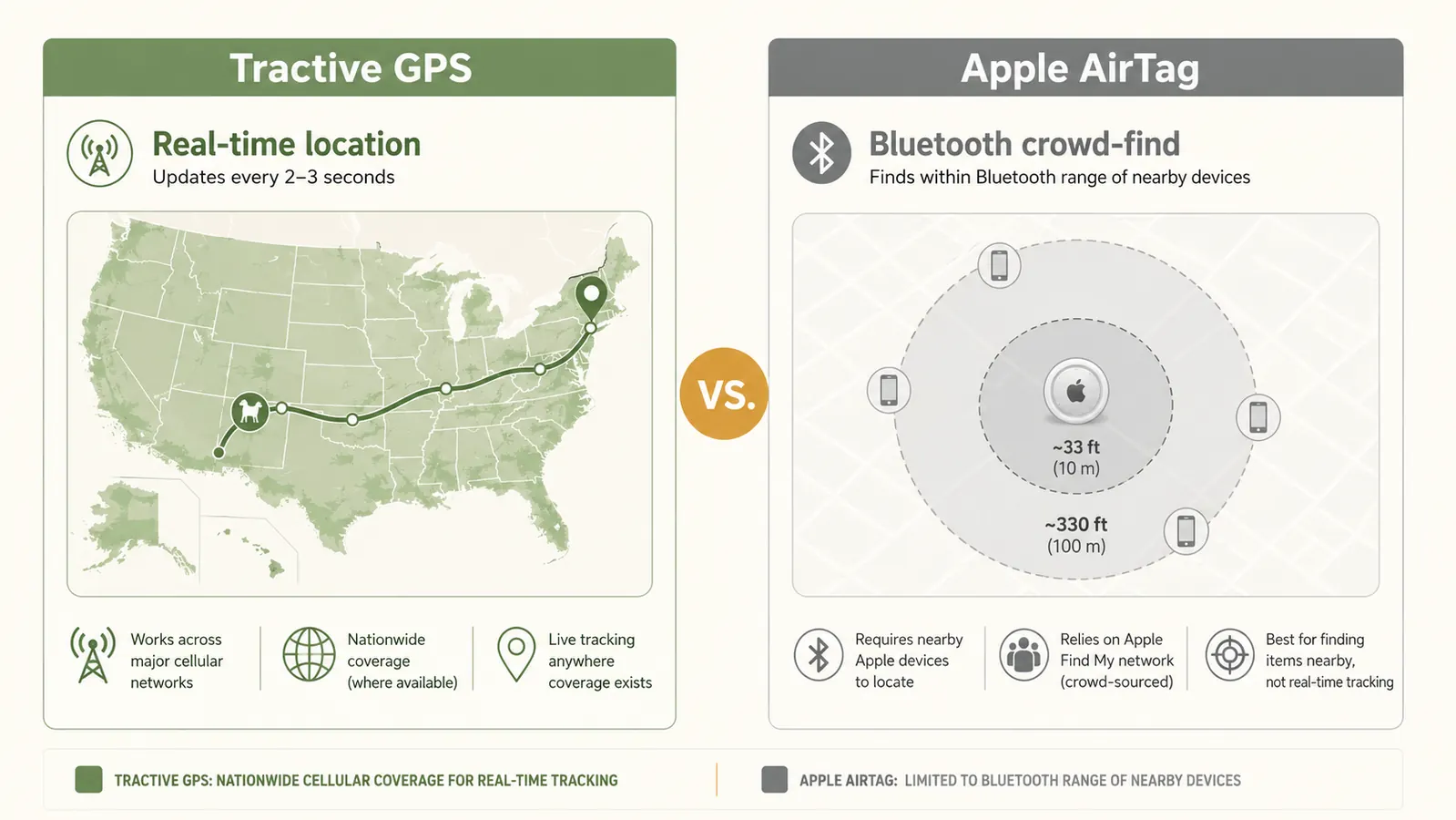
The Subscription Question: What It Costs Over Time
I am not going to tell you the subscription is free or small, because it is a real cost. Tractive charges a monthly or annual fee for the cellular data plan, and you cannot use the tracker at all without it. The hardware cost is just the entry point. Over two to three years, the total spend on a Tractive is going to be meaningfully higher than an AirTag. If budget is the primary constraint, that is a real factor.
What I tell people is to think about what their dog would cost to replace, or more accurately, what a week of panicked searching, lost-dog flyers, and shelter visits is worth in stress and time. For me, the answer made the subscription feel like the cheapest insurance I buy. But that calculation is personal. What I would not do is buy the Tractive, let the subscription lapse to save money, and assume the hardware still works. It does not. If you are going to use it, stay current on the plan.
Rural Coverage and the Crowd-Find Problem
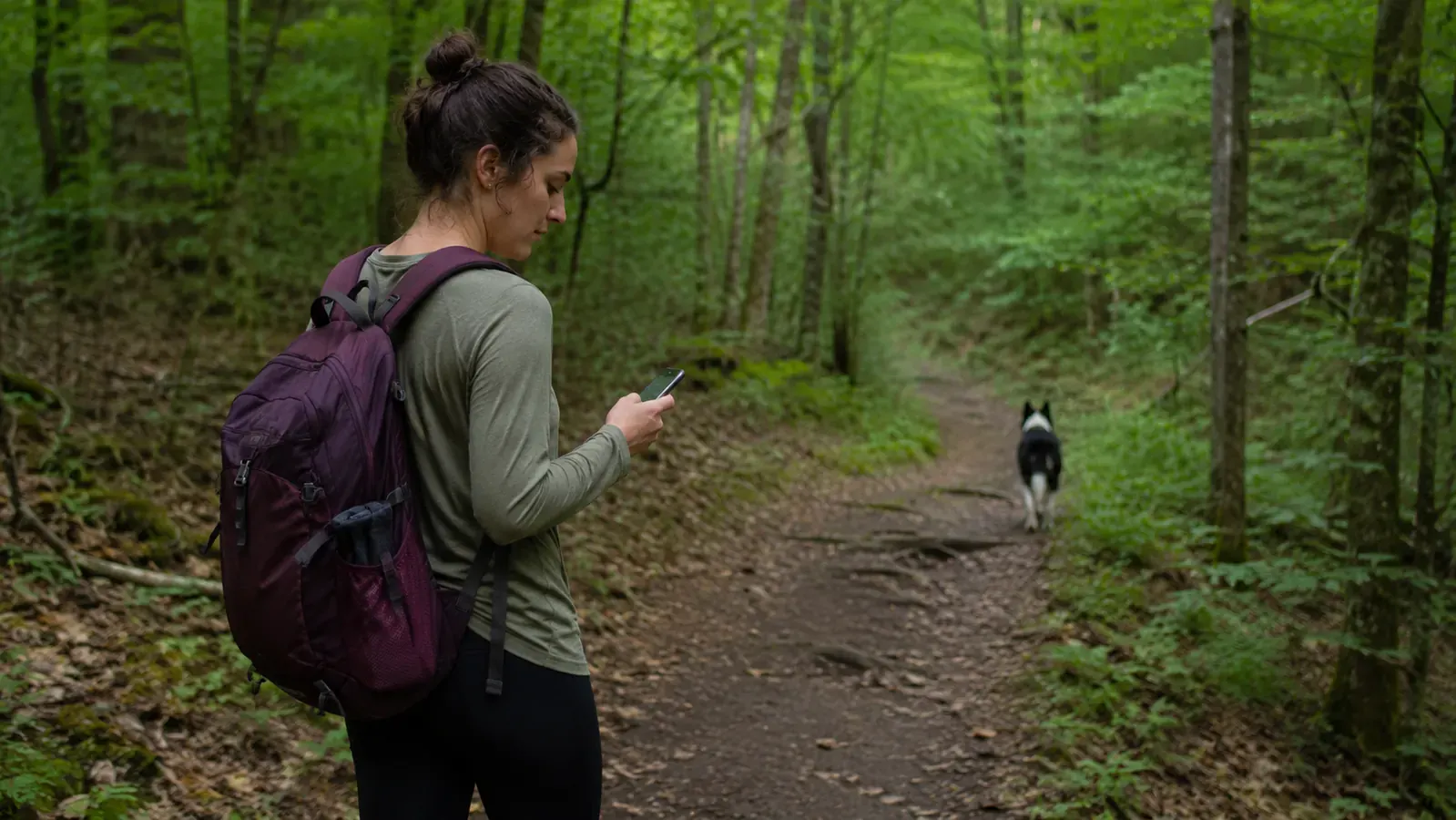
The AirTag's weakness is most visible in low-density areas. If you live in a suburb where houses are spread out, take your dog hiking in rural areas, or live somewhere that iPhones are not constantly moving around your neighborhood, the crowd-find network gets thin fast. An AirTag on a lost dog in a county park with one hiking trail is essentially invisible until a hiker with an iPhone happens to walk past. That could be hours. It could be longer.
The Tractive's coverage depends on your cell carrier. In most suburban and urban areas of the US, that means good coverage. In genuine wilderness, deep rural areas, or inside thick concrete buildings, you will find gaps. But in my experience with Daisy, every single escape has happened within a few blocks of our house, and cell coverage there is full-strength. The Tractive found her every time. If you hunt, hike deep trails, or live somewhere rural, check your carrier's coverage map for your specific area before buying either device.
Battery Life in Real Use
The Tractive's battery is the one thing that requires a habit change. I charge it every two nights now, the same way I charge my phone. Tractive includes a small USB charging clip, and I set it on the counter next to Daisy's nighttime water bowl. The routine took about a week to stick. What I do not do is put it into Live Mode, which sends updates every two to three seconds, unless she is actually missing. In normal mode, the battery comfortably lasts three days. In Live Mode during one of her escapes, I watched it drop meaningfully over twenty minutes, which is fine because twenty minutes was all I needed.
The AirTag battery situation is the opposite. A year of battery life sounds great until you realize that the flip side is zero charging, zero battery awareness, and a dead tag somewhere around month thirteen that you do not notice until the day you need it. I would rather charge every two days and know the device is alive than replace a coin cell annually and wonder if I remembered.
Who Should Buy Which
Buy the Tractive if your dog has ever escaped or if you have genuine anxiety about the possibility. If your dog is a digger, a fence-jumper, a door-dasher, or a dog that has actually gone missing before, the real-time GPS is not optional, it is the whole point. Also buy the Tractive if you want virtual fence alerts so you know the second your dog crosses a boundary, before they are gone. And buy it if you use your dog's activity data to monitor their health or hit exercise goals, because the Tractive app tracks all of that.
Buy the AirTag if your dog is low-escape-risk, lives in a dense urban or suburban environment with constant iPhone foot traffic, and you want a no-subscription location tag for peace of mind rather than emergency response. A calm older dog who stays in the yard and goes on leash walks is a reasonable AirTag candidate. An independent-minded Beagle who treats the fence as a suggestion is not.
One more thing worth knowing: AirTags are designed for items, not animals. Apple has not optimized them for pet use, and the Find My network was built around humans carrying iPhones, not dogs running across empty fields. The Tractive was built specifically for pets from the ground up, and it shows in the app design, the alert logic, and the subscription model. The difference in polish matters when it is 10pm and you are trying to find your dog.
Five months, four escapes, four recoveries. That is the Tractive track record on my dog.
The Tractive Smart Dog GPS Tracker rated 4.0 out of 5 by over 4,500 verified buyers. See current pricing and read recent reviews on Amazon to decide if it fits your situation.
Amazon Check Today's Price on Amazon →