

My dog Biscuit is a 12-year-old mixed-breed shepherd, about 68 pounds, and she was diagnosed with moderate hip arthritis about two years ago. The first sign was not the vet visit. It was the sound she made getting up off the floor every morning: a low, reluctant groan I had been explaining away as just old dog stuff. Once I actually paid attention, I realized she was waking up stiff and uncomfortable every single day, and that the cheap polyfill bed I had been replacing every 18 months was a big part of the problem. Switching her to the Bedsure Orthopedic Dog Bed was the first concrete thing I did, and it made a noticeable difference within the first week.
Arthritis in dogs does not take breaks at night. Joints can stiffen during sleep when a dog stays in one position for hours on a surface that does not distribute their weight evenly. That morning groan is not your dog being dramatic. It is what happens when inflamed joints spend eight hours pressed unevenly against thin foam or a flat mat. The good news is that the right sleep setup genuinely changes things. This guide walks through five practical steps that helped Biscuit sleep better and wake up moving more freely. I am not a veterinarian, and nothing here replaces a conversation with your vet about your dog's specific condition. These are the owner-tested steps that made a real difference, and they are worth knowing.
Your dog is waking up sore. The right orthopedic bed is where the fix starts tonight.
The Bedsure Orthopedic Dog Bed uses 4-inch solid egg-crate foam that distributes weight evenly across hip and shoulder joints, a waterproof inner liner, and a machine-washable outer cover. Low-entry bolsters mean an arthritic dog can step in without jumping. Over 51,000 reviews, rated 4.5 stars. Check today's price and available sizes before your dog has another rough night.
Amazon Check Today's Price on Amazon →Step 1: Replace the Flat Mat with a Bed That Has Real Foam Depth
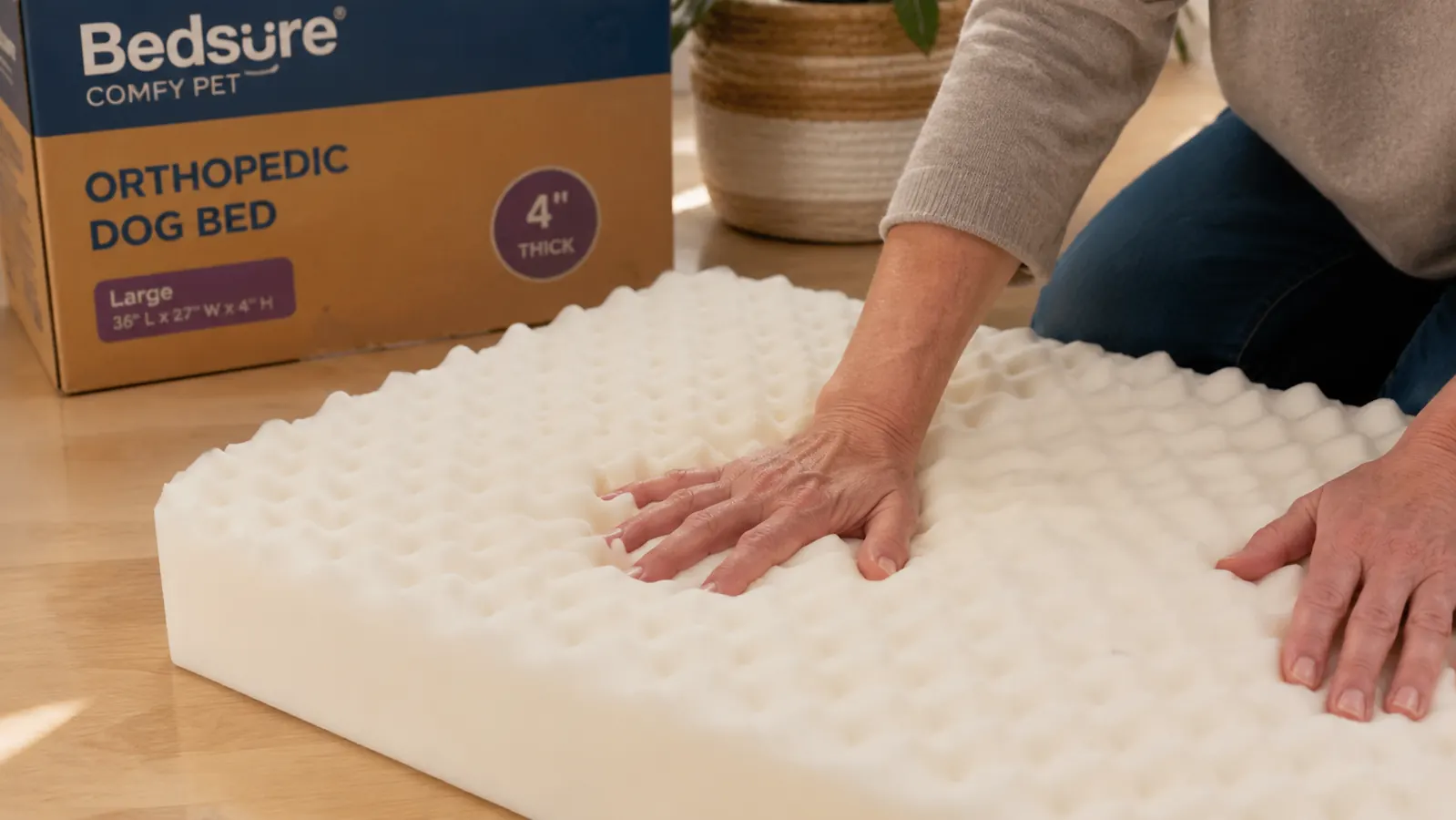
The single biggest upgrade you can make is moving your arthritic dog off a flat mat or thin cushion and onto a bed with at least 3 to 4 inches of supportive foam. Not polyfill stuffing. Not shredded memory foam that compresses to almost nothing after six weeks of daily use. Actual solid foam, ideally egg-crate or medium-density orthopedic foam, that can support the dog's weight without bottoming out under their heaviest points. When a surface bottoms out, the dog's weight shifts entirely onto bony prominences like hips, shoulders, and elbows. That creates concentrated pressure on the exact joints that are already inflamed and tender.
The Bedsure Orthopedic Dog Bed uses a 4-inch egg-crate foam base that holds its shape through regular use and multiple machine-wash cycles. After I switched Biscuit to this bed, I noticed within the first week that she was not circling obsessively before lying down the way she used to. Dogs circle partly to test the surface before committing their weight to it. Fewer circles usually means the surface passed the test faster, which told me she was settling into comfort more quickly. When joints hurt, getting comfortable is not automatic, and a surface that earns trust fast is worth something.
When you are shopping for foam depth, do not take a listing's word for it when it says orthopedic. Many beds use that label while containing 1.5-inch polyfill or thin shredded foam that offers no meaningful joint support. Look for the actual foam insert depth listed in the product specifications. For a dog over 50 pounds with arthritis, anything under 3 inches is too thin. For large and giant breeds, 4 inches should be the floor. If the listing does not specify foam thickness, that is a warning sign worth heeding.
Step 2: Size the Bed for How Your Dog Sleeps Now, Not How They Used to Sleep
An arthritic dog needs room to stretch out. Dogs with joint pain often stop curling tightly because bending inflamed joints to a compact position is uncomfortable. If your dog used to sleep curled in a ball and now stretches out flat more often, they are telling you directly that their body needs a different sleeping posture. A bed sized for a compact curled position is now too small for their actual resting shape. Measure your dog from nose tip to tail base while they are fully extended and lying on their side. That number is your minimum bed length.
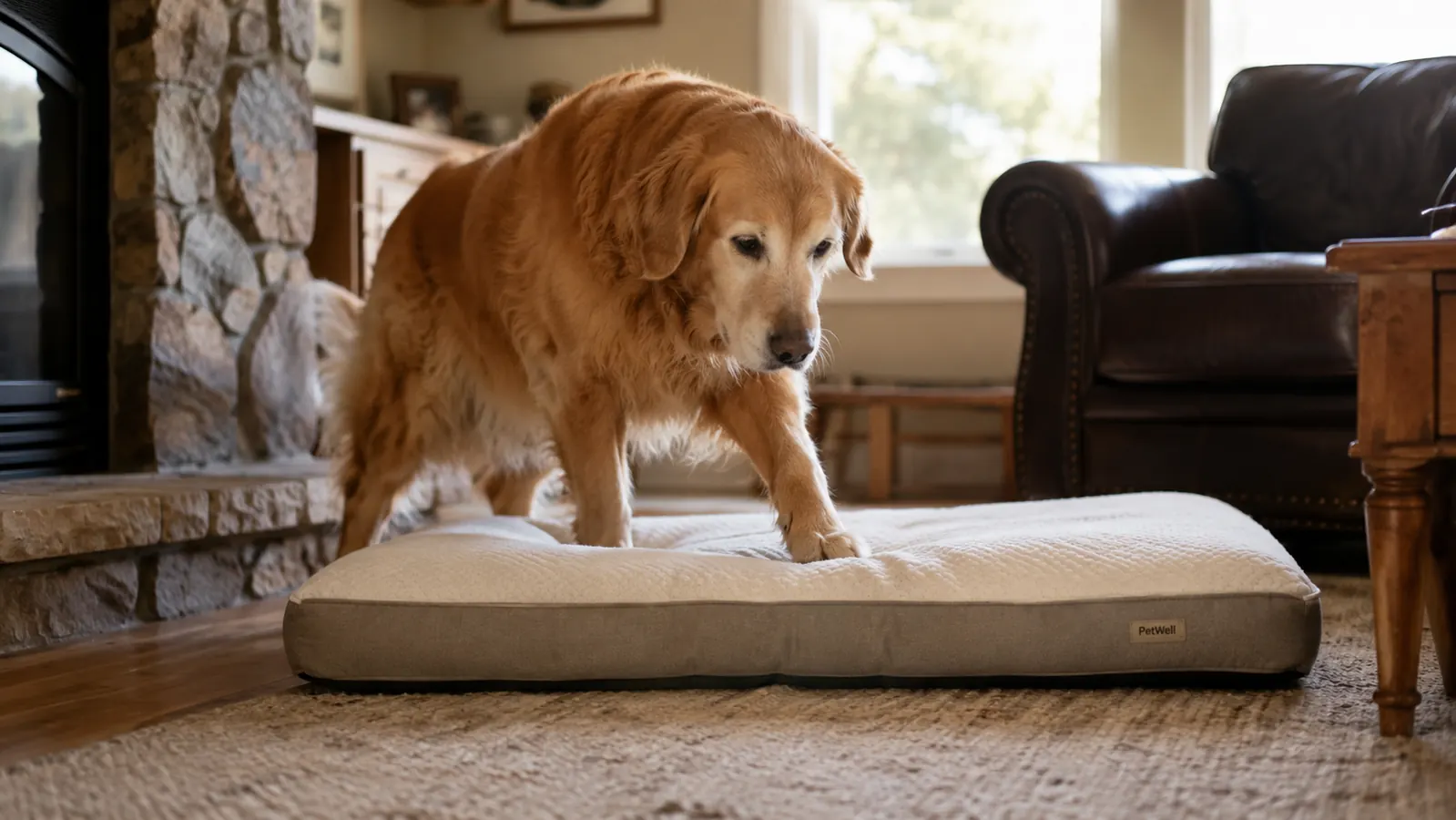
For Biscuit, that measurement came to about 42 inches fully stretched. I went with the Large size of the Bedsure bed, which gave her enough room to extend completely without hanging a leg off the edge. The bolsters on the perimeter matter here too. A well-designed bolster gives the dog something to rest their head and chin against without having to actively hold their neck up all night, which reduces strain on the cervical spine and upper back. But the bolster height should be low enough that an arthritic dog can step into the bed rather than climbing or jumping over the edge. That is the balance that is easy to miss, and the Bedsure bolster profile gets it right for most dogs.
If your dog is between sizes on the manufacturer chart, go up. The cost difference between sizes is usually small, and a slightly oversized bed is always better than one they have to fold themselves into. An arthritic dog who cannot fully stretch out on their bed is not resting well, even if they have learned to tolerate it.
Step 3: Pick the Placement Carefully
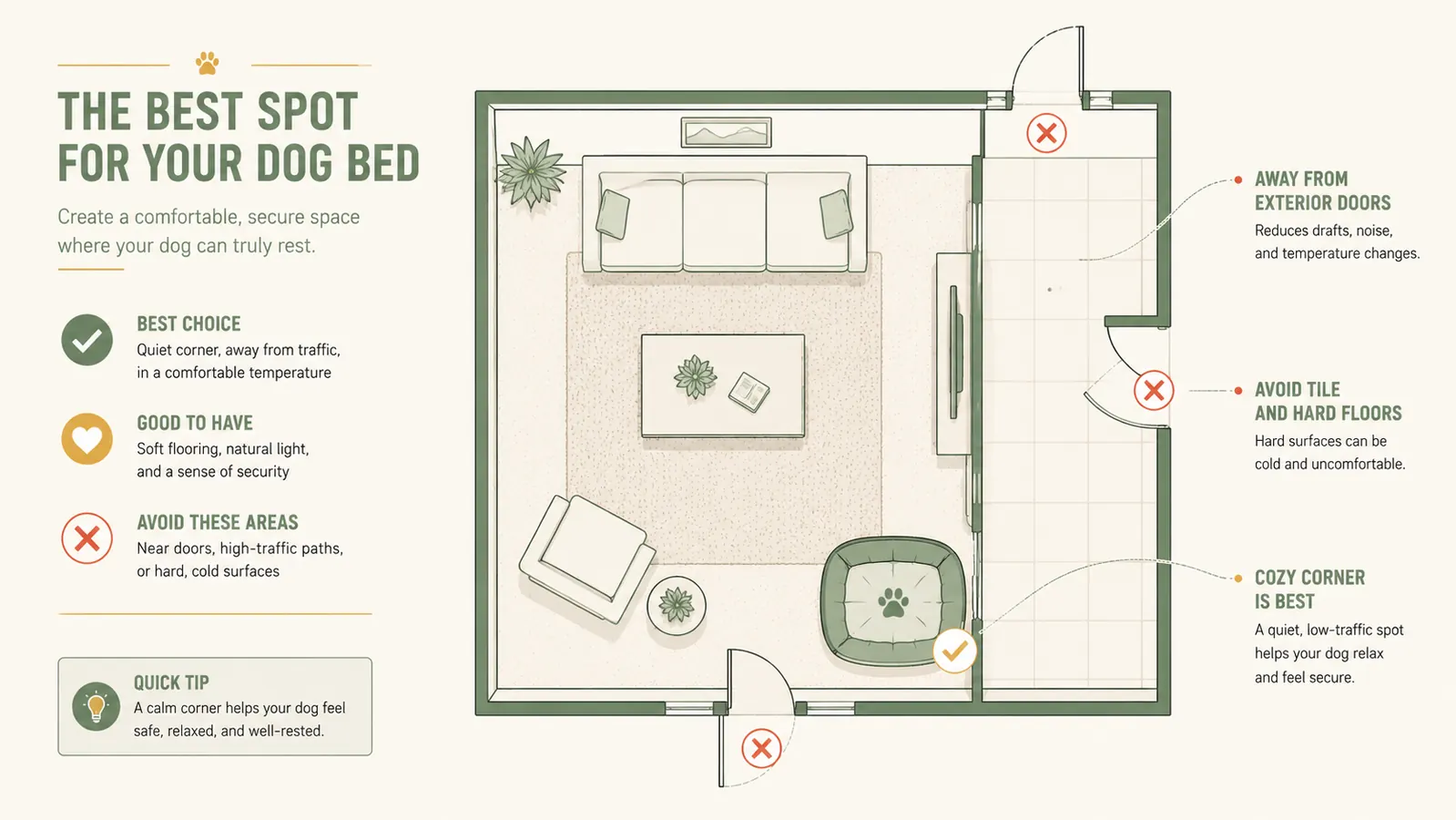
Where you put the bed matters almost as much as which bed you choose. Cold surfaces and drafts make arthritis worse. If the bed sits on tile or hardwood in a spot that catches a draft from an exterior door or window, the ambient cold is actively working against everything the foam is designed to do. A dog lying on warm, draft-free foam sleeps more deeply and wakes up less stiff than the same dog on the same foam in a cold location.
Choose a corner away from exterior doors and windows, on carpet or a rug where possible. If your floors run cold and the only practical location is on tile, put a rubber-backed rug underneath the bed to create a thermal break between the foam and the floor. Avoid placing the bed in high-traffic hallways or entryways where the dog will get bumped or wake up from passing feet repeatedly. Senior dogs, and especially dogs already dealing with pain, sleep more restoratively when they are not startled awake every few hours. A quiet, warm corner is worth rearranging furniture for.
Think about accessibility as well. If getting to the sleeping area requires navigating stairs, that nightly climb is adding joint stress before the dog even lies down. If it is practical, move the sleeping area to the main floor where your dog spends the most waking hours. Even a temporary change during flare-up periods can reduce the cumulative load on the joints that makes nighttime harder.
Step 4: Build a Short Pre-Sleep Routine That Warms the Joints Before Bed
Dogs with arthritis sleep better when their joints are warm and loose going into the night rather than already stiffening from a long inactive evening on the couch. A short, gentle 10-minute walk before bed keeps blood circulating to the joints and prevents them from locking up during the first deep-sleep phase. This is not about cardiovascular exercise. It is about keeping the joint mechanics moving so that lying down does not feel like sinking into concrete. The walk does not have to be fast. Even a slow stroll around the block is enough.
For dogs whose arthritis is severe enough that even a short walk is difficult on bad days, a gentle massage of the hips and shoulders before bed can do much of the same work. The goal is not to manipulate the joints but to warm the surrounding muscle tissue with slow, steady pressure, which helps the whole area relax. Ask your vet to demonstrate the technique at your next visit. Most vets are happy to walk through it in five minutes, and dogs who accept the massage tend to settle faster and move less during the night.
That morning groan is not your dog being dramatic. It is what happens when inflamed joints spend eight hours pressed unevenly against a surface that does not support them properly.
Step 5: Talk to Your Vet About Supplements and Pain Management
The bed and the routine handle the mechanical side of the problem. But if your dog's joints are actively inflamed, there is a ceiling to what gear and habits alone can achieve. Veterinary-recommended joint supplements like glucosamine and chondroitin have a real evidence base for long-term cartilage support, and many arthritic dogs show meaningful improvement in comfort and daily mobility after six to eight weeks of consistent use. They are not a quick fix, but they are also not empty promises. Ask your vet whether a glucosamine supplement is appropriate for your dog's age, weight, and kidney health, since dosing matters and some formulations are not suitable for all dogs.
For dogs with moderate to severe arthritis, your vet may also discuss prescription anti-inflammatory medications specifically formulated for dogs. This is important to mention because human NSAIDs like ibuprofen and aspirin are toxic to dogs and should never be used as a substitute. A dog that is not in active pain sleeps more deeply and wakes up less during the night. The orthopedic bed addresses mechanical pressure. Pain management addresses the underlying inflammation. Both together work better than either one does on its own.
Biscuit currently takes a veterinary-recommended omega-3 supplement and a daily glucosamine chew alongside the bed and the bedtime walk. The combination has her sleeping through most nights without the restless repositioning she did before. She still has arthritis. That is not going away. But she is moving through her days with noticeably less effort than she was six months ago, and the mornings are quieter.
What Else Helps
A few additional things made a real difference for Biscuit that do not fit cleanly into the five steps above. First, a waterproof liner matters more than most people expect. Arthritic dogs sometimes have nighttime accidents because they cannot get up and outside fast enough. A bed that cannot survive machine washing without losing its foam shape becomes unusable quickly. The Bedsure bed has a removable washable outer cover and a waterproof inner liner, which means the foam itself stays clean and dry. I have run the cover through the washer a dozen times and it has not shrunk or pilled. That washability is not a bonus feature. For a senior dog, it is a practical requirement. Second, pet ramps are worth getting earlier than you think you need them. If your dog used to jump onto the couch or your bed and now hesitates, the jump is already hurting them. The repeated impact of landing from even a modest height puts significant shock load through arthritic hips and elbows. A low-angle ramp removes that impact entirely, and most dogs learn to use one in a day or two with a little encouragement. Third, regular nail trims matter. Overgrown nails change the angle at which the foot contacts the ground, which shifts the load up the leg and into the hip joints. For a healthy young dog this is minor. For an arthritic senior, it adds up. Keep nails short. Your groomer can manage it, or your vet can show you the right length to target if you trim at home.
If your dog is waking up stiff every morning, the right orthopedic bed is the most impactful change you can make today.
The Bedsure Orthopedic Dog Bed is what I use for Biscuit, and it is the one I recommend without hesitation for large and senior dogs with joint issues. Four-inch egg-crate foam, a machine-washable waterproof cover, and low-entry bolsters an arthritic dog can actually step over rather than climb. Check current pricing and available sizes on Amazon. Over 51,000 ratings at 4.5 stars means a lot of other owners have been in the same place you are right now.
Amazon Check Today's Price on Amazon →