
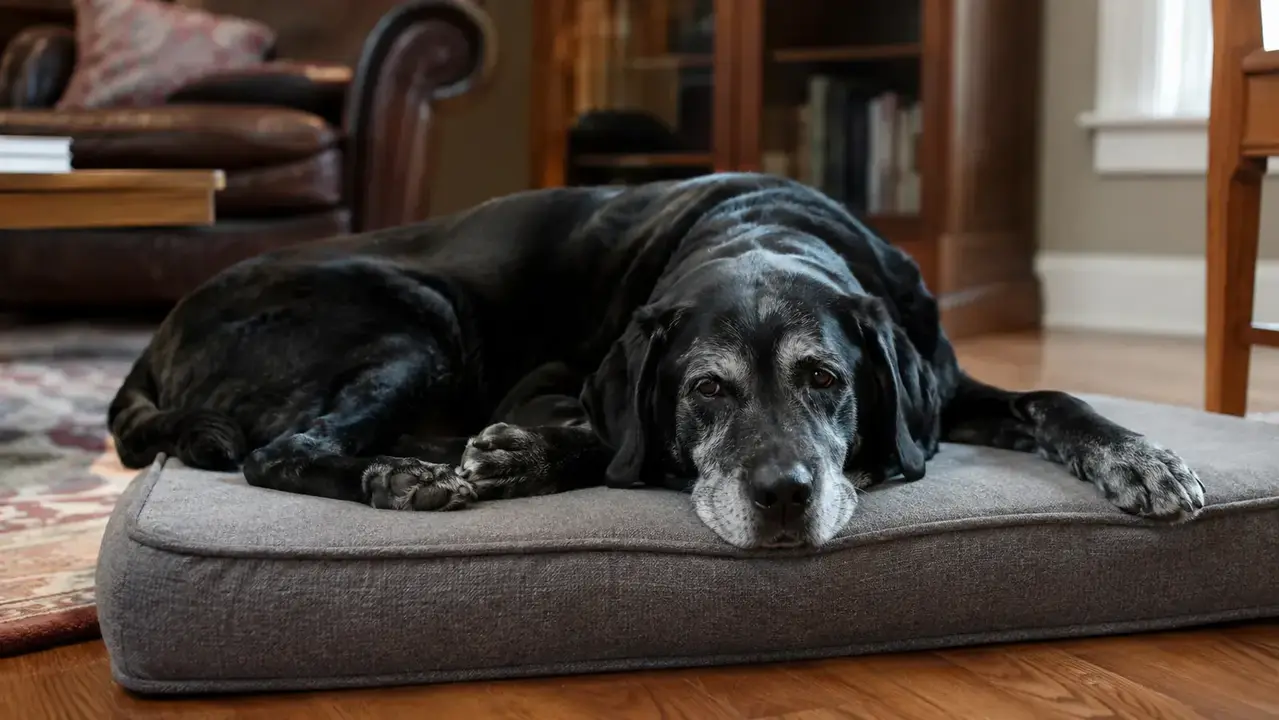
My Lab, Rosie, turned eleven in February. She weighs 90 pounds, has moderate hip dysplasia confirmed by X-ray in late 2024, and she has strong opinions about where she sleeps. For the first decade of her life I rotated through every budget dog bed I could find, stuffed beds, poly-fill cushions, cedar-chip things that smelled like a campfire, and I watched every single one flatten into a sad pancake within a few months. When her vet flagged that she needed genuine pressure-point relief, not just something soft to land on, I started taking bed shopping more seriously. The Bedsure Orthopedic Dog Bed landed in my cart in October 2025, and as of today it has been Rosie's main sleeping surface for eight full months.
I want to be straight with you upfront: I had low expectations going in. The price point put it firmly in budget territory, and I had been burned by budget beds before. Eight months later my expectations were mostly exceeded, with a few real caveats worth knowing before you buy. This is the long-term view, not a first-week impression.
The Quick Verdict
Solid orthopedic support at a fair price, with washability that actually survives repeated cycles, though the foam compresses noticeably after six months of heavy daily use by a large dog.
Amazon Check Today's Price →Rosie finally stopped stiff-legging it out of bed every morning. See today's price on the Bedsure Orthopedic Bed.
Over 51,000 ratings. Available in multiple sizes for large and extra-large dogs. Ships with Amazon Prime.
Amazon Check Today's Price on Amazon →How I've Used It
Rosie sleeps on this bed roughly 14 hours a day, which is typical for a senior Lab with her activity limitations. The bed lives in the living room on hardwood floors, which means it gets pushed around every time she circles before flopping down. I have washed the cover 12 times total over eight months, usually once every three weeks and sometimes more after muddy outdoor days. I have not replaced any components. That is the real-world baseline for everything I am about to tell you.
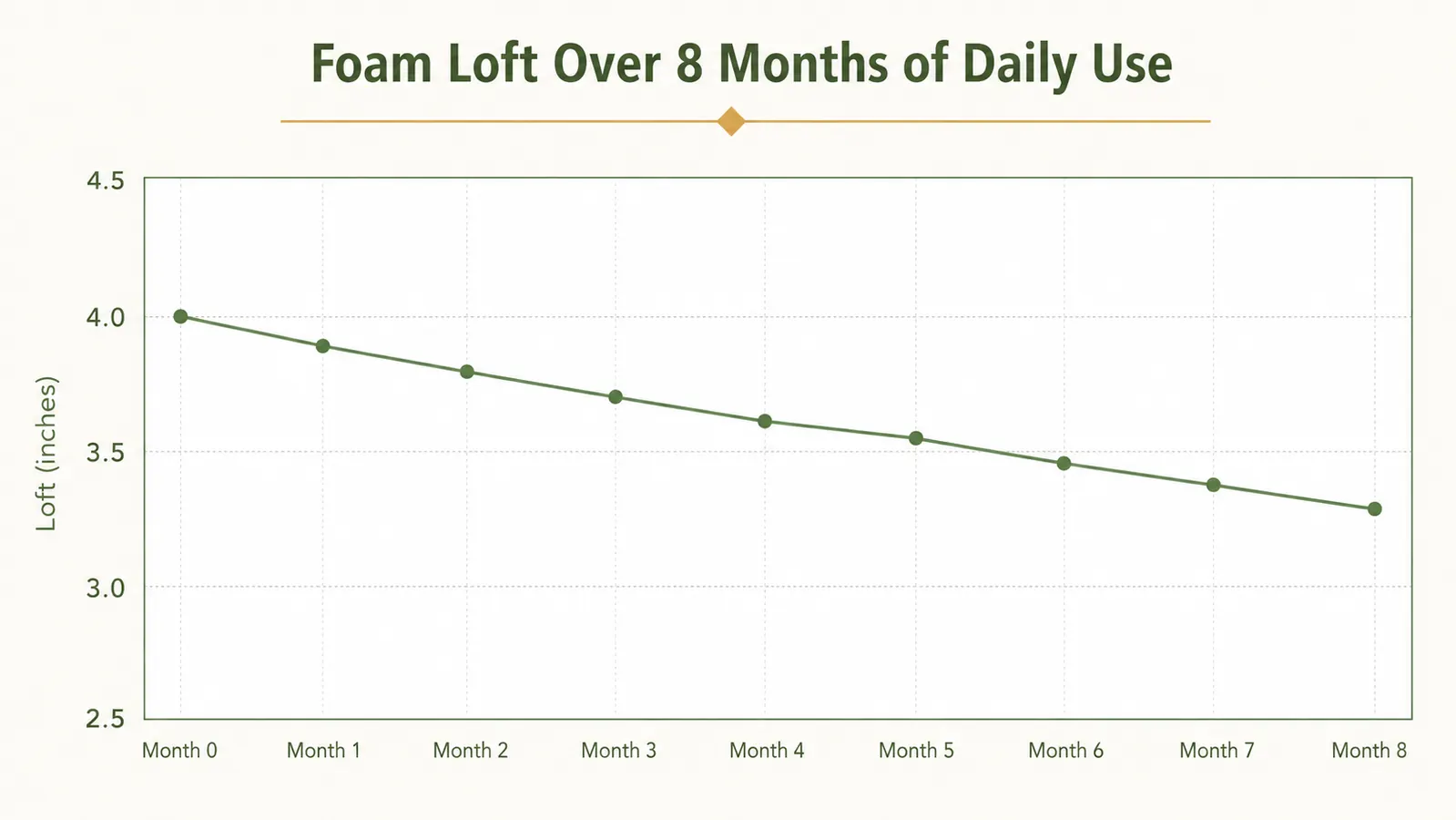
The large size I purchased measures approximately 40 by 30 inches, which fits Rosie with a few inches of clearance on all sides. She is both a sprawler and a bolster-leaner depending on her mood, so I needed both the flat sleeping surface and the raised back bolster to actually function. I weighed and measured the foam insert before first use and again at the six-month mark to track compression. The honest result was roughly a 17 percent reduction in loft by month six, then holding roughly steady between month six and month eight. You can see that trajectory in the chart below.
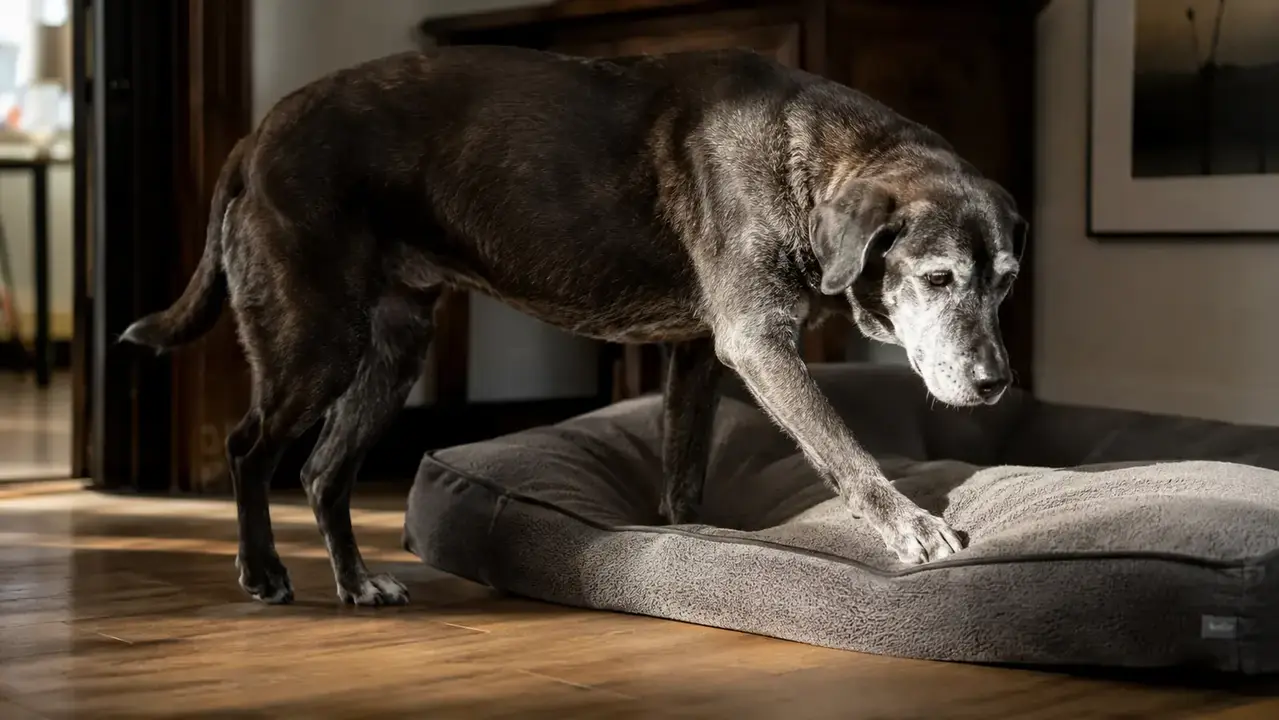
I also kept an informal log of how quickly Rosie rose from the bed each morning during the first 60 days compared to her previous poly-fill bed. It is not a clinical measurement, but she was visibly less stiff getting up within the first two weeks. Her vet noticed the improvement at the four-month wellness check and asked what we had changed. She told me to keep whatever we were doing and added it to Rosie's chart notes. That kind of unsolicited feedback from a vet carries more weight with me than any product description.
What's Actually Inside: Foam and Fill
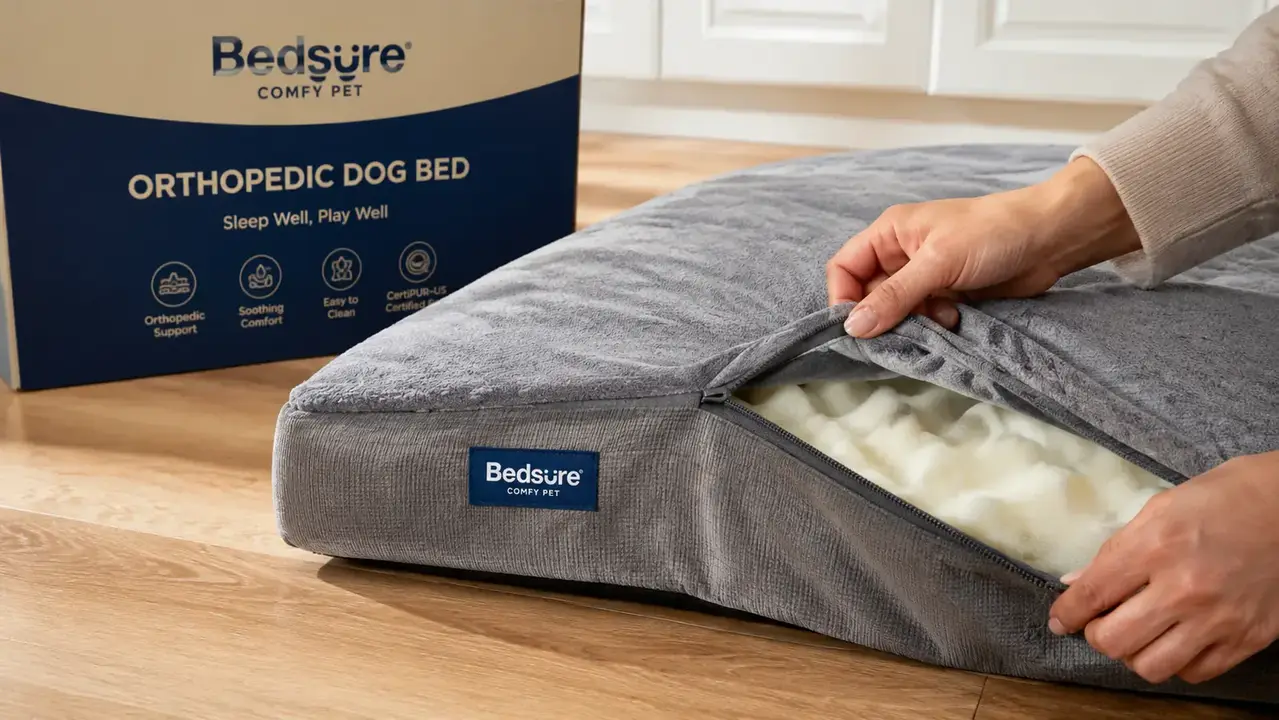
The Bedsure orthopedic dog bed uses an egg-crate foam base topped with a layer of flat memory foam. The egg-crate pattern is designed to distribute a dog's weight across more surface area rather than concentrating pressure under bony points like hips and elbows. For a dog with hip dysplasia, this distinction matters a lot. Traditional poly-fill compresses directly under the heaviest contact points, which is exactly where Rosie needs relief the most. The egg-crate base resists that kind of uneven collapse, at least through the first several months of regular use.
The top memory foam layer softens with body heat, which means the bed actually improves during the first 20 minutes of use as it warms to Rosie's temperature. I have sat next to her and watched her visibly settle deeper into it over time. The downside is that memory foam at this price point is not high-density foam. After six months of Rosie's 90 pounds landing in the same corner every night, I could feel a softer, more compressed zone in her preferred spot. It has not bottomed out, but it is noticeably less resilient than it was at month one. If your dog weighs under 70 pounds this probably is not an issue at all. At 90 pounds it is something to monitor and plan around.
Her vet asked at the four-month check-in what we had changed. I told her it was the bed. She said keep it.
Washability: The Part That Actually Surprised Me
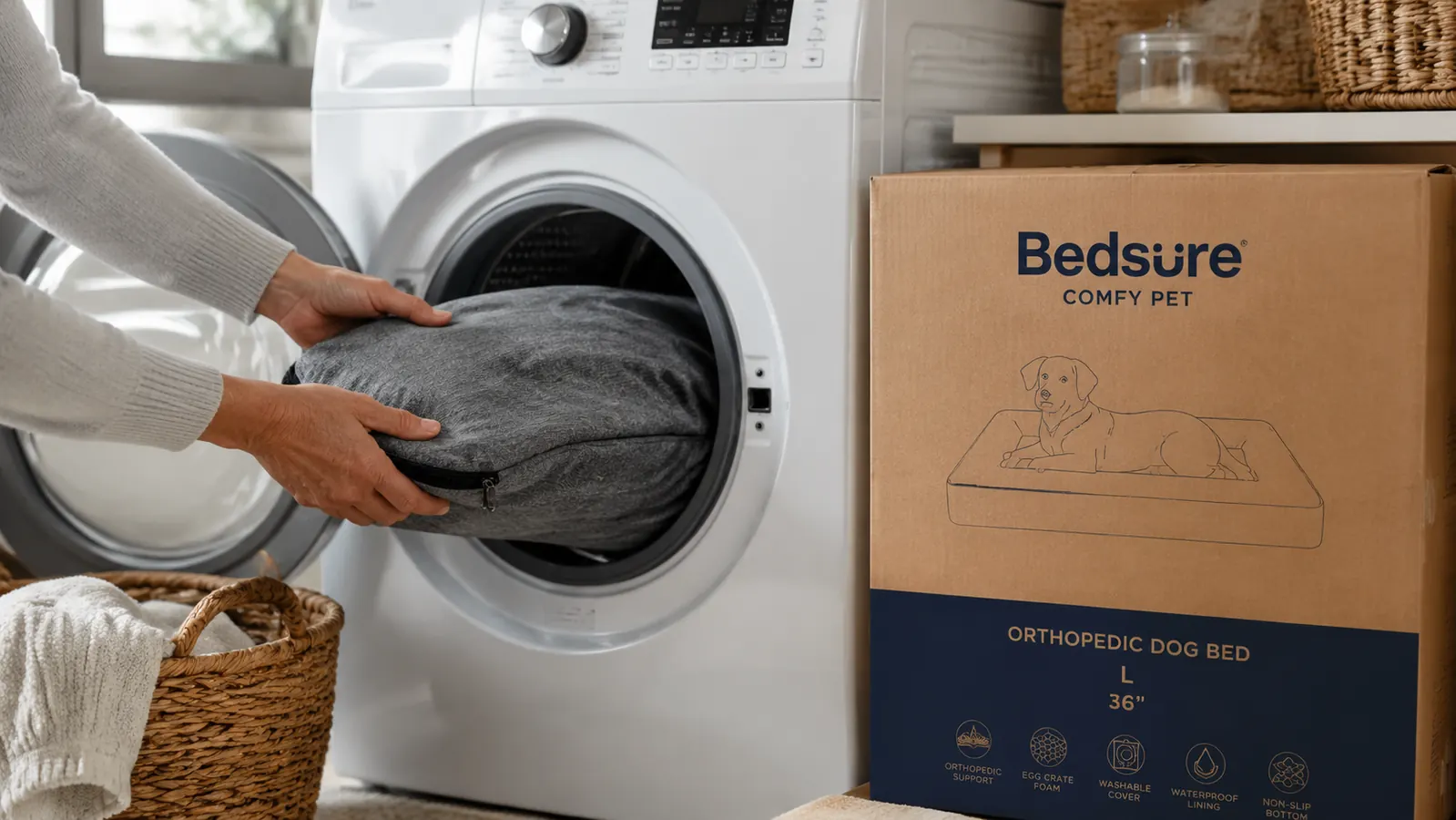
I have owned dog beds that claimed to be machine washable and destroyed themselves by the third cycle. Fraying seams, blown zippers, fabric that felt like sandpaper after drying. The Bedsure cover has now survived 12 washes in cold water on a gentle cycle with none of those problems. The zipper closes cleanly after every wash, the seams have not frayed, and the fabric has not pilled to the point of feeling rough against my hand. I tumble dry on low heat and nothing has shrunk to the point of not fitting back over the insert.
The inner foam is not machine washable, which is standard for this type of construction. I spot-clean it with a damp cloth and a small amount of dish soap when needed, then air it outside for an hour. The cover includes a waterproof liner between the fabric shell and the foam insert, and that liner has handled the occasional overnight accident without soaking into the foam itself. For an older dog who sometimes has nighttime leaks, that waterproof barrier is what makes this bed genuinely practical over the long term. Without it, you would be replacing the foam insert far more frequently and the real cost of ownership would climb fast.
The Bolsters: Useful, With One Caveat
The raised bolsters run along three sides of the bed, with the front left open for easy entry. Rosie uses the back bolster as a headrest about 60 percent of the time, which is exactly the intended purpose. The side bolsters give her a sense of enclosure she seems to genuinely prefer, though she is not an anxious dog generally. The bolsters hold their shape noticeably better than the main sleeping surface, probably because they do not bear the same concentrated body weight that the flat center section absorbs every time Rosie lies down.
There is one practical limitation worth flagging: the bolsters share the main cover with the sleeping surface and are not independently removable. If you want to wash just the bolster fabric because your dog rubs her face on it repeatedly, you pull the entire cover off as one piece. For targeted spot cleaning this can feel like more effort than it should be. I started draping a washable fleece blanket over the back bolster to protect that fabric, which has slowed the discoloration considerably and gives Rosie something warm to tuck her chin into.
What I Liked
- Egg-crate plus memory foam base genuinely supports large senior dogs with joint issues
- Machine-washable cover survives repeated cycles without fraying, shrinking, or zipper failure
- Waterproof inner liner protects foam from accidents, a real practical advantage for older dogs
- Low entry height makes it easy for stiff dogs to step on and off without struggling
- Over 51,000 ratings with strong consistency across large dog sizes
- Bolsters are functional as headrests and provide a sense of enclosure dogs seek
Where It Falls Short
- Memory foam noticeably compresses after 5 to 6 months under dogs 85 pounds and heavier
- Bolster covers are not independently removable from the main cover for targeted washing
- Egg-crate foam base can catch on hardwood floors if the anti-slip bottom fabric lifts at the edges
- No carry handle, which matters when repositioning a large, heavy bed across rooms
Months 1 Through 8: What Changed and When
Months one and two were the honeymoon period. The foam was at full loft, Rosie accepted the new bed within three days with no transition drama, and the morning-stiffness improvement was clear within the first two weeks. Months three and four were steady. No visible changes to the bed, cover washed twice each month, everything clean and structurally holding up the way I hoped. Months five and six were when the foam compression in her preferred corner became noticeable. Soft but not collapsed. I added a folded fleece blanket over that spot as a simple patch, which she appreciated anyway because she likes something to knead before settling down for the night.
Months seven and eight: the bed is still Rosie's primary sleeping surface and I have not replaced it. The compressed corner persists at roughly the same level it reached at month six, which suggests the foam has stabilized rather than continuing to break down progressively. The cover is intact through all 12 washes. The waterproof liner has not failed once. I would call the current state functional but no longer optimal for a 90-pound dog who uses it 14 hours daily. If your dog is lighter, or rotates between two sleeping spots, the foam will hold up considerably longer. For a dog Rosie's size and routine, I am starting to look at whether to order a replacement foam insert to restore the support without buying a whole new bed.
Who This Is For
The Bedsure orthopedic dog bed is the right call for large and extra-large senior dogs in the 50-to-80-pound range who need genuine pressure-point support without a premium price. It is also a strong choice for dogs with diagnosed hip or elbow dysplasia where a flat poly-fill bed is clearly failing but a specialty orthopedic bed does not fit the budget. If washability matters because your dog has allergies, incontinence, or just tracks in everything from outside, the cover durability holds up better than I expected at this price. And if you want beds in multiple rooms, the value per unit makes that realistic.
It also works well as a first orthopedic upgrade for owners who are not sure yet how much their dog will use a premium sleeping surface. The price keeps the risk low. If your dog ignores it entirely, you are not out a lot. If your dog takes to it the way Rosie did, you have bought yourself some real relief for their joints without waiting until the budget problem is solved.
Who Should Skip It
If your dog weighs over 85 pounds and sleeps in one concentrated spot for 12 or more hours every day, go in knowing the foam will compress by month five or six and the bed will need refreshing or replacing within a year. It is a one-year solution at that intensity, not a forever bed. Dogs who are committed chewers will work through the cover zipper, and while replacement foam inserts are sold separately they add to the total cost calculation. If your dog is still young and not yet dealing with joint problems, a simpler flat bed will serve them well for now and you can save the orthopedic investment for when it actually pays off. For a full head-to-head look at how this bed stacks up against dedicated memory foam competitors at a higher price point, the Bedsure vs memory foam dog bed comparison breaks down exactly where the price difference goes. And if you want the case for why joint pressure relief matters more than most people realize for aging dogs, the 10 reasons an orthopedic dog bed helps senior dogs article covers it in plain language.
Eight months in and Rosie still picks this bed over every other surface in the house. Check today's price and size options.
Available in multiple sizes for dogs up to extra-large. Over 51,000 customer ratings. Ships Prime. The washable cover and built-in waterproof liner are what keep this one practical after months of real daily use.
Amazon Check Today's Price on Amazon →