
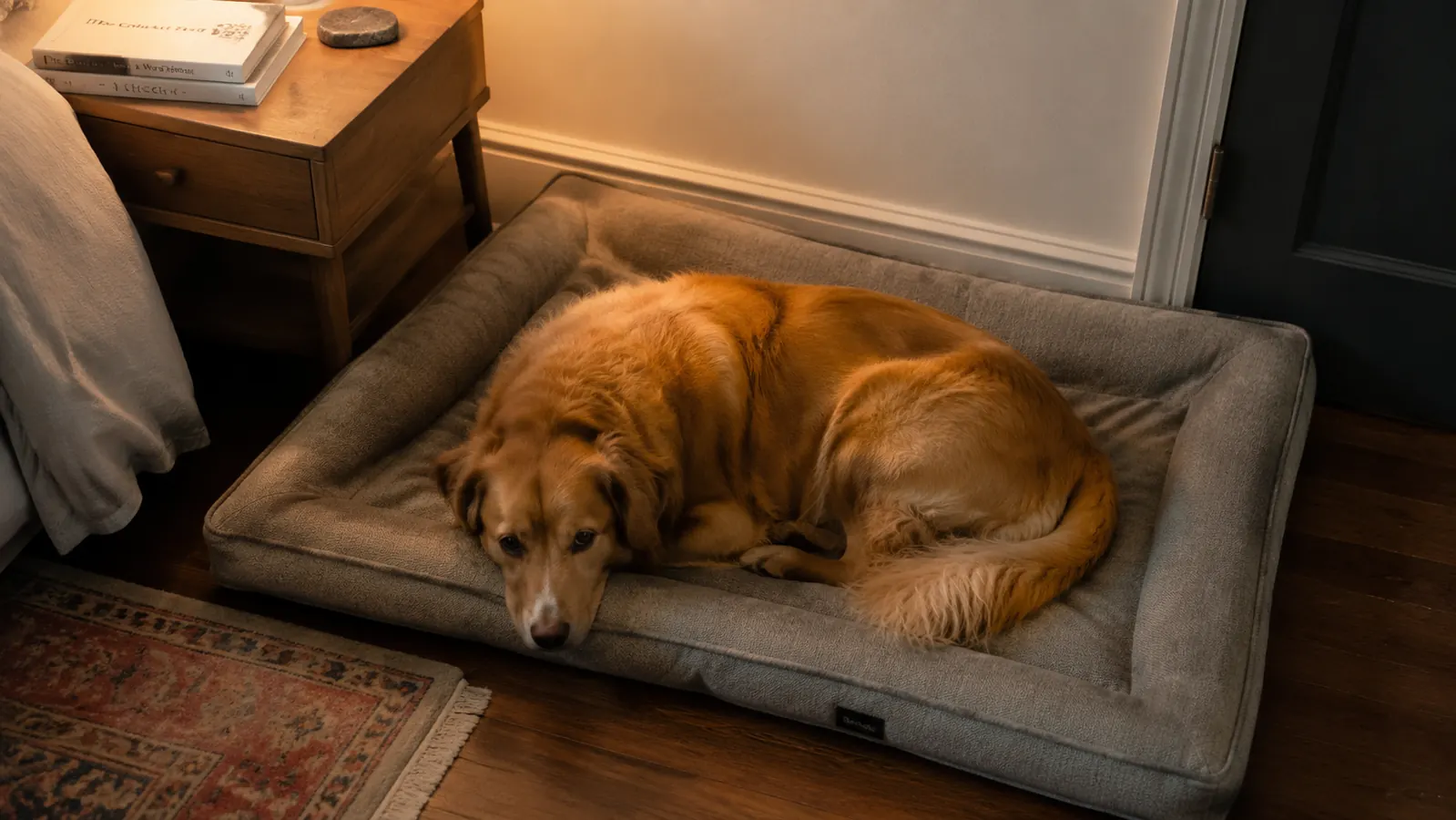
Let me tell you what the listing page does not cover. I bought the Bedsure Orthopedic Dog Bed for my dog Biscuit, a 72-pound Golden Retriever mix who was diagnosed with mild elbow dysplasia at age six. He is now seven and sleeps about 13 hours a day, which means his bed is one of the most consequential purchases I make for him. I ordered the large size, unboxed it, put my hand on the foam, and immediately had questions. Not deal-breaker questions. But questions that 51,000 reviews glossed right over and that I had to figure out through several months of daily use on my own.
This is not the review that tells you the bed is great and leaves it at that. It is the review that tells you exactly what surprised me, what I wish someone had warned me about, and what the high-volume rating average smooths over when you are trying to make a real decision for a dog with actual joint needs.
The Quick Verdict
Worth buying for medium-to-large dogs with joint issues, but size up from what you think you need, air it out for two days before use, and do not expect the foam to match a premium orthopedic bed.
Amazon Check Today's Price →Your dog's vet told you to get something better than a flat poly bed. Here is where the Bedsure actually earns its place.
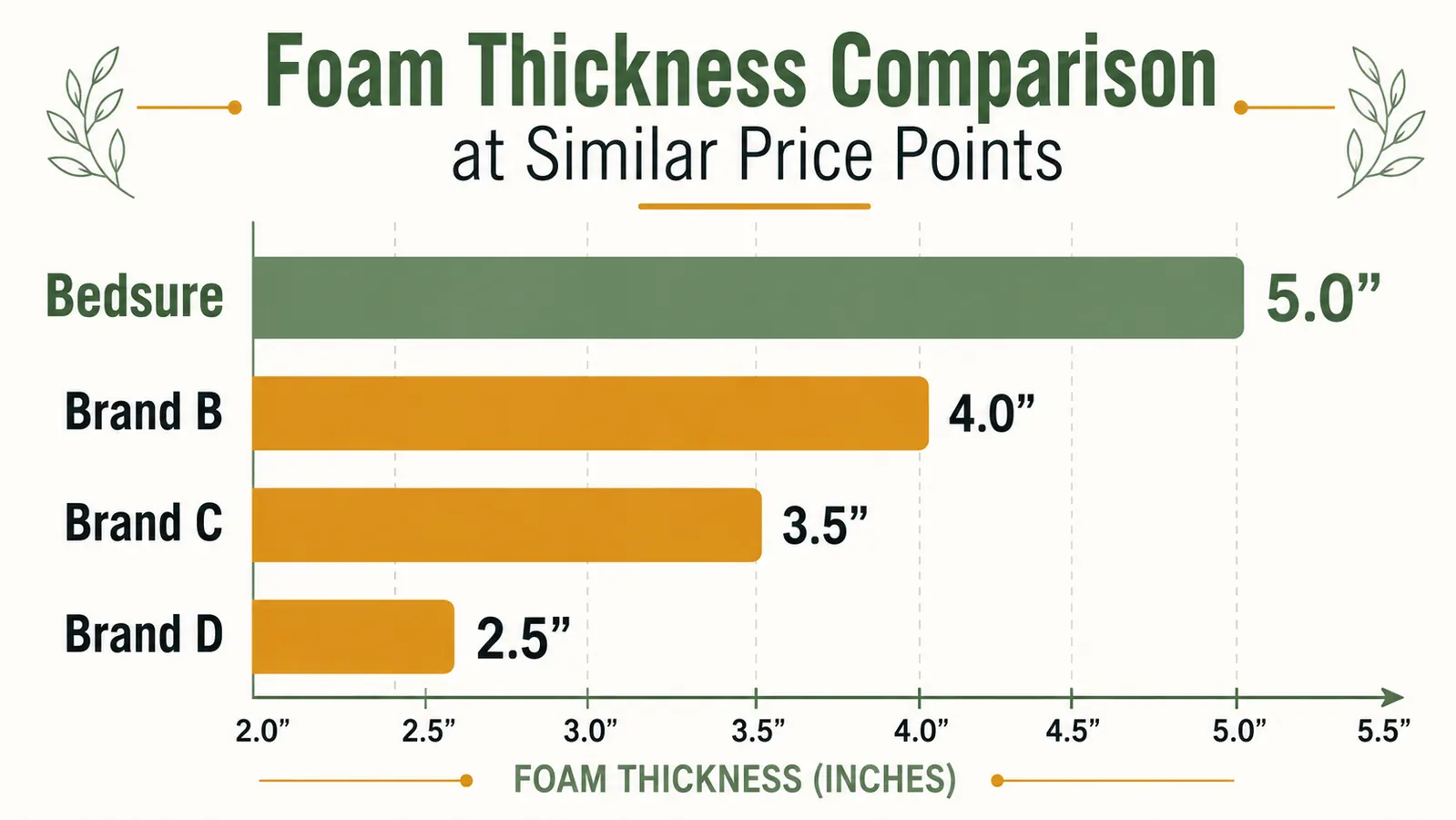
Over 51,000 customer ratings across multiple sizes. Ships Amazon Prime. The foam is thicker than anything in the same price range, and the cover washes without falling apart.
Amazon Check Today's Price on Amazon →How I've Used It (Biscuit's Setup)
Biscuit sleeps in the bedroom on carpet, which is a different environment from hardwood floors. He circles twice before dropping, always lands on his right side first, and rotates to his left elbow by morning. His vet flagged the left elbow as the one to watch, and that elbow is consistently in contact with the bed for several hours each night. I bought the large size, which fit his body length with a few inches to spare. He is 72 pounds and about 25 inches at the shoulder. The large was adequate but I will revisit the sizing question in detail below because it matters more than the listing makes clear.
I have been running this bed for roughly five months. The cover has been through seven machine washes. I have not replaced the foam or any other component. I kept notes on what I noticed and when, partly because his vet wanted to hear how the joint support was performing. That habit of observation is what turned up most of the honest details in this review.
The Foam Firmness Problem Nobody Mentions
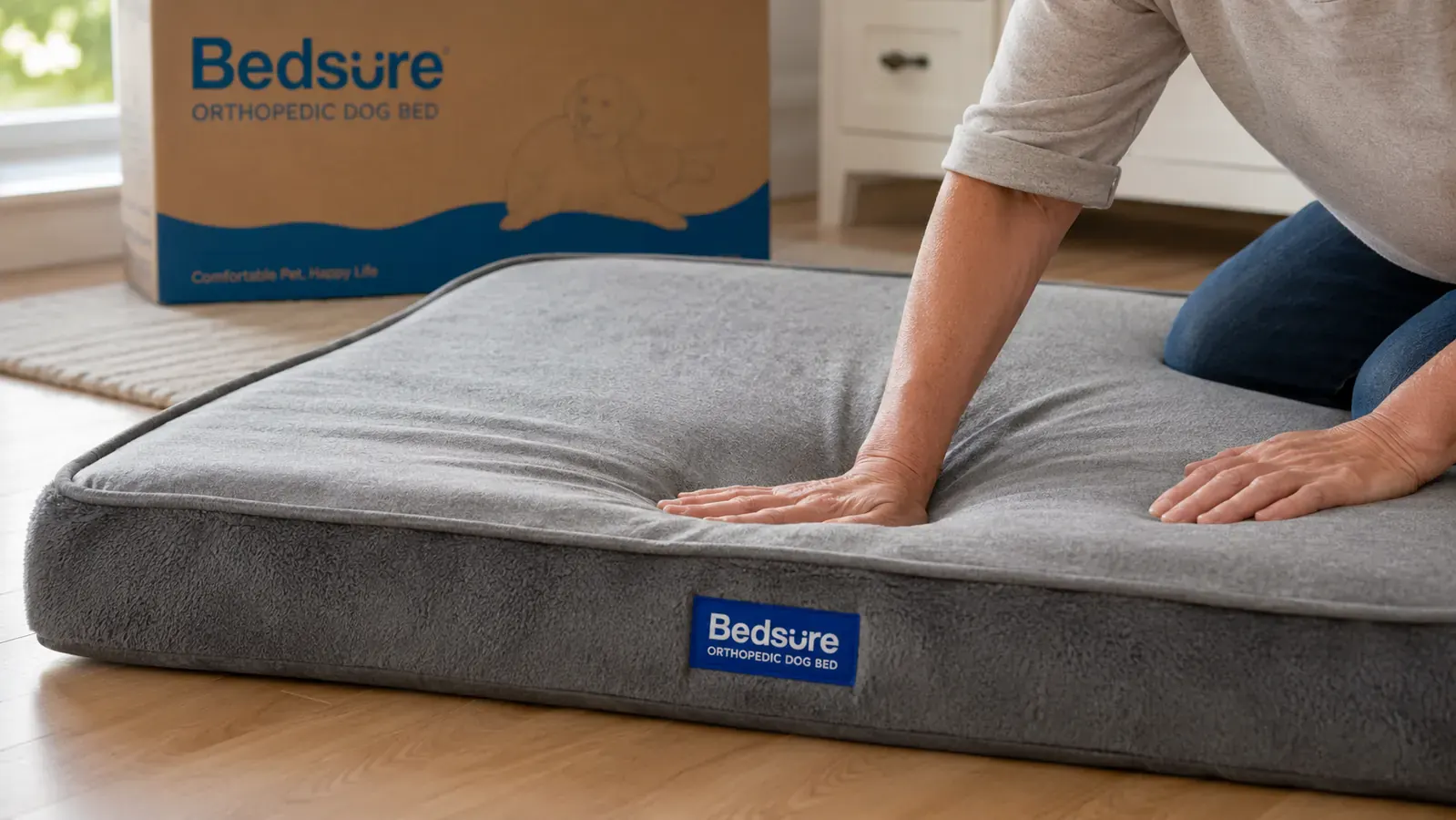
When the Bedsure listing says orthopedic foam, it conjures a specific mental image: dense, supportive, slow-to-compress material that holds its shape under weight. The egg-crate foam base does distribute pressure reasonably well, which is the whole point of the convoluted surface pattern. But the foam itself is not particularly firm. It is medium-soft. When I pressed my full palm flat into the center of the bed, it compressed about two inches with moderate hand pressure. That is not what I think of when I think of orthopedic support.
For Biscuit at 72 pounds this has been fine. His weight distributes across enough foam surface area that he is not bottoming out. But if your dog is over 85 pounds and tends to plant their weight heavily in a single spot, the foam compression rate at this density will matter to you. The word orthopedic in the product name describes the intended function, not the foam specification. Actual medical-grade orthopedic foam is rated by ILD (indentation load deflection) and is typically 30 to 45 ILD for large dogs. Bedsure does not publish their ILD rating. That gap in specification is what nobody in the review pool seems to flag, and it is the thing I would most want to know before buying.
At five months, Biscuit's preferred landing spot in the center of the bed is noticeably softer than the perimeter. Not collapsed. Not flat. But softer. I pressed both spots and the difference is clear. For his elbow dysplasia it still provides measurably more relief than his previous flat poly bed, but I want to be straight that the foam is doing its job in relative rather than absolute terms.
The Smell in Week One
Nobody mentioned this and it genuinely startled me. When I unboxed the bed it had a pronounced chemical smell, the kind associated with new foam products. It is not toxic. It is a common off-gassing smell from the materials used in foam manufacturing. But it was strong enough that Biscuit refused to go near the bed for the first 36 hours. He is not a skittish dog. He eats anything and sleeps anywhere. But that new-foam smell was a hard no for him until it faded.
The fix is simple: leave the bed unboxed outdoors or in a well-ventilated space for 48 hours before bringing it into your dog's room. The smell dissipates completely. By day three it was completely neutral and Biscuit took to it immediately. If I had known this going in I would have planned for it, but because the listing and review photos all show dogs on new beds with no caveats, I was caught off guard. If your dog is sensitive to smells or new objects, plan a two-day airing window before introducing the bed.
Biscuit refused to touch it for 36 hours after unboxing. Two days outside and it smelled like nothing. He has not left it since.
The Washing Reality: Seven Cycles In
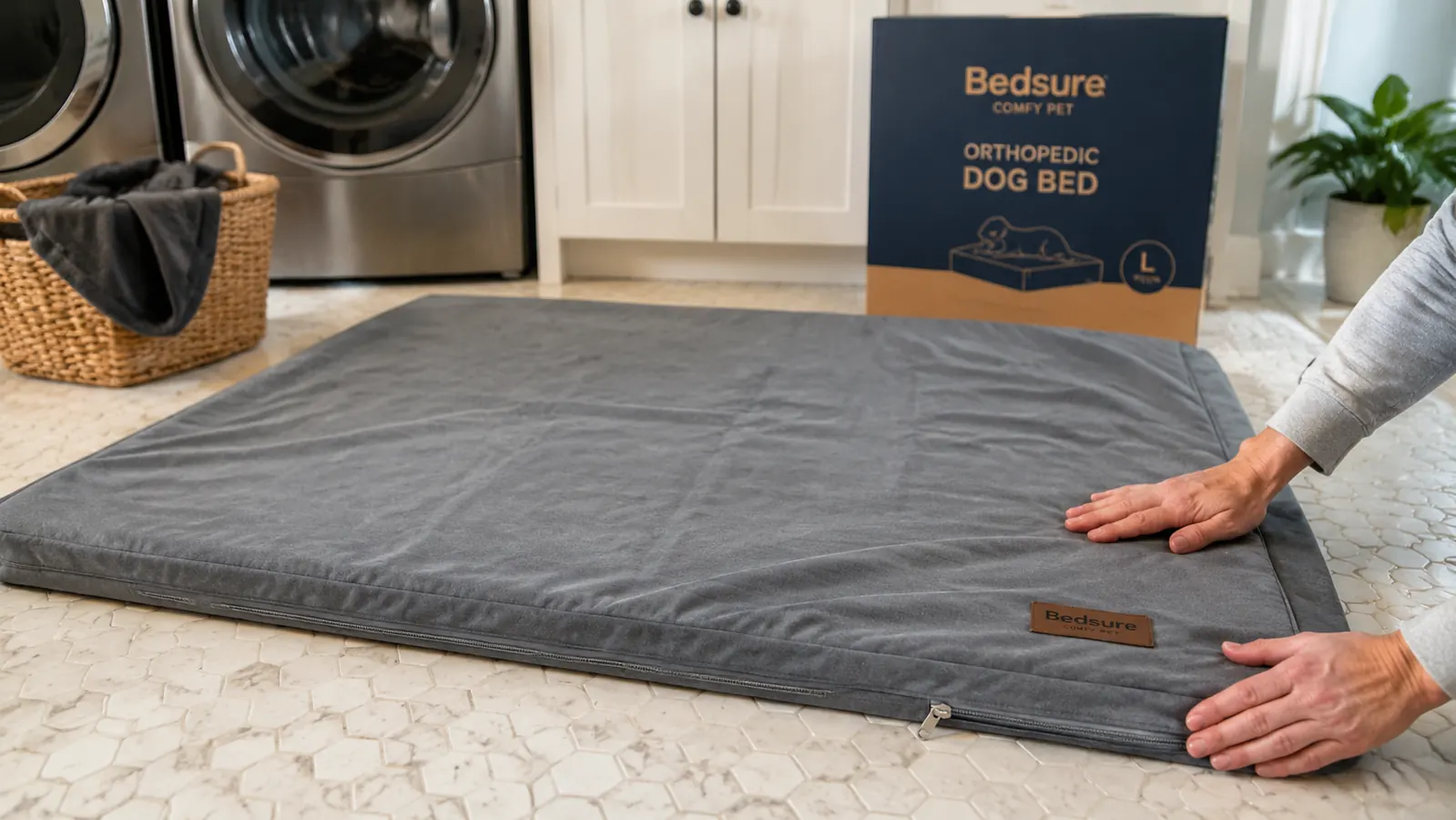
The cover is machine washable and it does survive repeated cycles, but with a few conditions worth knowing. I wash on cold, gentle cycle, and tumble dry on low. On my sixth wash I accidentally used warm water because I was rushing. The cover came out noticeably stiffer and the fabric felt slightly different against my hand. It did not shrink enough to matter for fit, but the texture change was real. After the seventh wash on cold it recovered most of its original softness. The lesson is that the care label instruction to use cold water is not decorative. Warm water changes the feel of the fabric, possibly the waterproof liner underneath too.
The zipper has held through all seven cycles with no snagging, no teeth damage, and no pull-tab loosening. That was my biggest fear going in because a blown zipper on a dog bed cover means the whole cover is useless and replacement covers for this model are not always easy to find in stock. Zip it closed before loading it into the machine. That single habit protects the teeth. One other note: the cover is not a quick dry. On low heat it took about 70 minutes for me, and I was checking at 45 minutes and again at 60. Pull it when slightly damp and lay it flat for the last 10 to 15 minutes rather than overdrying. That preserves the waterproof liner bonded into the fabric.
Edge Support: Honest Assessment
The bolsters feel fuller than the main sleeping surface, which makes sense because they do not bear direct body weight the way the flat center does. Biscuit uses the back bolster as a pillow and does this heavy-sigh press where he deliberately plants his chin into it for what I can only call dramatic effect. The bolster holds up under that chin-plant routine and shows no compression after five months. The side bolsters are thinner than the back bolster, which I noticed but Biscuit has not seemed to care about.
Where the bolster design has a genuine limitation: the open front. The three-sided bolster configuration leaves the entry side completely flat with no raised edge. Biscuit tends to stretch in his sleep and his front legs regularly hang off the open edge. That does not bother him, but it means the entry side offers zero edge support for dogs who lean or push toward the front. If your dog nests or pushes against all four sides for security, this three-sided setup will feel incomplete. It is a design choice, not a defect, but it is worth knowing going in.
The Sizing-Up Advice I Give Everyone
I bought the large. Biscuit is 72 pounds and I measured his body length before ordering. The large was technically sufficient. But I should have bought the extra-large. Here is why this matters more than most people expect. The bolsters take up real estate inside the stated dimensions. The usable flat sleeping surface inside the bolster ring is smaller than the outer measurement. For a 72-pound dog who sprawls sideways, which Biscuit does every single night, the effective sleeping area in the large left him with maybe an inch of clearance on each side. That is tight. When he rolls he hits the bolster edge and wakes up, and when he wants to stretch fully his legs go off the open front.
The rule I now share with anyone who asks: take your dog's measured body length and add eight to ten inches. Use that number to pick your size, not the weight range in the listing. The weight ranges skew toward dogs who curl to sleep. If your dog stretches at all, especially large or long-bodied breeds, the weight range guidance will land you one size too small. Sizing up costs a modest amount more but gives the sleeping surface your dog actually needs, and the bolsters become functional headrests instead of obstacles.
What I Liked
- Egg-crate foam base distributes weight better than flat poly-fill, a real benefit for dogs with elbow or hip dysplasia
- Machine-washable cover survives repeated cold-water cycles without zipper failure or seam fraying
- Waterproof liner between cover and foam protects the insert during accidents or damp conditions
- Bolsters hold shape well after months of use and give dogs a headrest surface they actually use
- Off-gassing smell clears completely within 48 hours with proper airing
- Available at a price that makes multi-room or multi-dog setups practical
Where It Falls Short
- Foam density is medium-soft, not firm orthopedic grade, and begins to compress noticeably after four to five months of heavy daily use
- Bolsters add to outer dimensions but shrink the usable flat sleeping surface, so sizing up is almost always the right call
- Warm water wash cycles change fabric texture and may affect the waterproof liner over time
- Three-sided bolster design leaves the entry edge completely flat with no support for dogs that push toward the front
- No ILD foam rating published, making true specification comparisons against premium orthopedic beds impossible

How It Compares to Beds at Twice the Price
I spent a week researching the mid-premium orthopedic dog bed segment before writing this. Beds in the higher price range from brands targeting serious joint care tend to use higher-density foam with published ILD ratings, removable and independently washable bolster covers, and in some cases certified orthopedic foam materials. Those are real differences that matter at month six and beyond, particularly for large dogs in the 80-to-100-pound range. If Biscuit were heavier, or if his dysplasia were more advanced, I would probably be in that price tier.
But for a dog in his situation, the Bedsure is doing the job the vet asked me to do. He is getting pressure relief from a surface that distributes his weight instead of piling it under his problem elbow. His morning stiffness has visibly improved from his old flat bed. The vet was pleased at his last checkup. And the cover has survived seven washes without becoming the unsanitary nightmare I had braced for. At the current price, the value-to-outcome ratio makes sense for most dog owners dealing with early or moderate joint issues. For a detailed side-by-side look at where the money goes when you spend more, the Bedsure vs memory foam dog bed comparison walks through exactly that comparison. And if you want the longer view on daily use and foam compression over a full year, the Bedsure long-term review covers eight months of continuous use in depth.
Who This Is For
This bed is the right call for dogs in the 50-to-80-pound range with diagnosed or suspected joint problems where a premium orthopedic bed is not yet in the budget, or where you want to test whether your dog will actually commit to a new sleeping surface before investing more. It also works well for multi-dog households where you need two or three beds and the per-unit cost of a premium option gets prohibitive fast. If your dog is somewhere between a flat poly bed and a full medical-grade orthopedic solution in terms of joint need, this is a reasonable middle ground that delivers real relief without requiring you to rationalize a major purchase.
Who Should Skip It
If your dog weighs 90 pounds or more and sleeps hard in one spot for 12-plus hours a day, this bed's foam will struggle past the five-month mark. You are better served by a higher-density option with a published ILD spec even if it costs more upfront. Committed chewer dogs who work on fabric seams or pull at zippers will damage the cover faster than the foam ever wears out, and replacement covers are not always in stock. And if your dog is a heavy side-stretcher who needs clearance in all four directions, pair the sizing-up advice above with the understanding that even an extra-large has a genuinely open front with no bolster support. For those dogs a different bed geometry might serve them better regardless of price.
Biscuit's elbow numbers improved at his last checkup. His vet credited the sleeping surface. See current pricing and size options.
Available in multiple sizes. Over 51,000 ratings. Ships Prime. Size up from the weight chart if your dog stretches at all, and air it out for two days before the first night.
Amazon Check Today's Price on Amazon →