
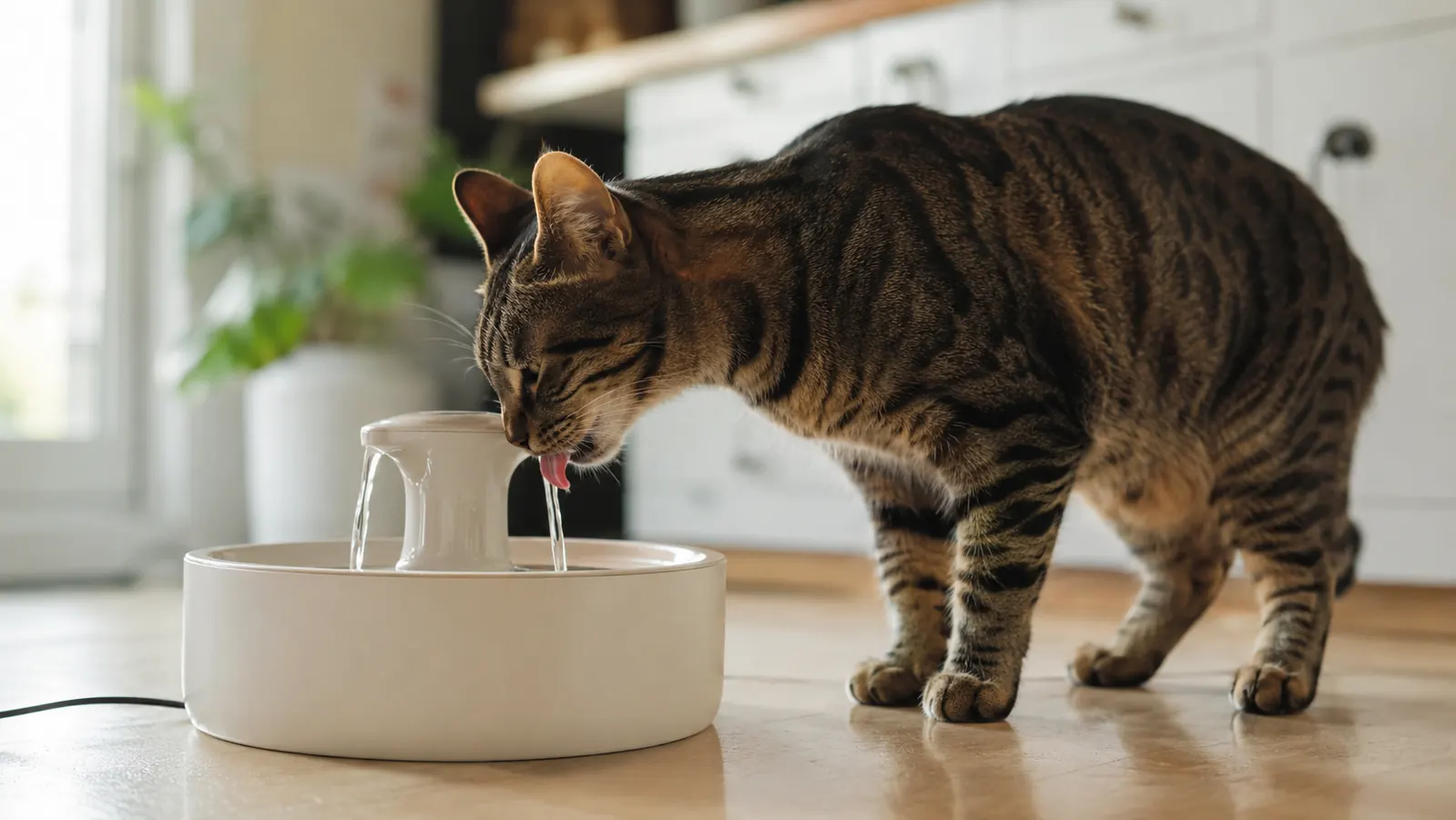
My two cats, Miso and Fig, spent years treating their water bowl like decoration. I refilled it twice a day, kept it spotless, even tried placing it away from the food bowl after reading that cats prefer separation. Nothing worked. Then I picked up the Veken 95oz Pet Fountain on a whim, mostly because it was cheap enough that I would not feel stupid if they ignored it too. They did not ignore it. Within two hours, both cats were at it. That was six months ago, and I have not had a worried vet visit about dehydration since. Now I get emails from other cat owners asking the same question I used to ask: is a fountain actually worth it, or is a clean bowl just as good?
The honest answer is that it depends on your animals, but for most cat households, the fountain wins by a meaningful margin. Cats are built differently than dogs when it comes to water, their history as desert hunters left them with instincts that make still water feel like a risk rather than a resource. That biology does not care that you scrubbed the bowl that morning. A plain bowl and a circulating fountain are solving two different problems, and understanding the gap between them is the whole point of this comparison. Here is how they stack up on the factors that actually affect your pets health and your daily routine.
| Pet Water Fountain | Regular Bowl | |
|---|---|---|
| Capacity | 95 oz (2.8L) recirculating reservoir | Typically 8-16 oz static fill |
| Water movement | Continuous circulation via quiet pump | Still, stagnant between refills |
| Filtration | Triple-layer carbon, ion exchange, and cotton filter | None; collects airborne dust and debris |
| Bacteria growth risk | Low; circulation and filtration slow biofilm buildup significantly | High; stagnant water develops biofilm in 24-48 hours |
| Refill frequency | Every 2-3 days for one or two cats | Daily minimum, twice daily in active households |
| Ongoing cost | Filter replacement costs a few dollars per month | Near zero; occasional bowl replacement only |
| Noise level | Faint whisper-quiet hum; adjustable flow rate | Completely silent |
| Cat acceptance rate | High; movement mimics running water cats instinctively prefer | Variable; many cats drink reluctantly or avoid the bowl |
| Cleaning effort | Full disassembly and scrub weekly; parts are dishwasher-safe | Daily rinse recommended; simple but requires consistency |
Where the Veken Fountain Wins
The biggest win is pure biology. Cats evolved as desert hunters who distrusted still water because stagnant pools in the wild were more likely to carry parasites and bacteria. Moving water signaled freshness and safety. Your cat is not being fussy when she ignores her bowl; she is following hardwired instinct that goes back thousands of years. The Veken's gentle circulating stream triggers exactly the response that still water never will. Veterinary behaviorists have documented this preference consistently, and the data shows up clearly in how much more cats drink when given moving water compared to a bowl placed right next to it.
Hydration matters more for cats than most owners realize, and the consequences of falling short are not just theoretical. Cats on dry kibble diets often operate at the edge of mild chronic dehydration, which quietly strains the kidneys over years. That slow-burn stress is a leading driver of the chronic kidney disease that affects a significant percentage of cats over age seven. If your cat has ever had urinary crystals, a UTI, or early kidney disease flagged by bloodwork, your vet almost certainly told you to increase water intake. A bowl often cannot get you there, because the cat simply will not drink enough from it. The Veken fountain, running quietly in the kitchen corner, keeps fresh filtered water available and appealing around the clock. In the six months since I switched, Miso's annual bloodwork showed kidney values solidly in the normal range for the first time in two years. Correlation, not proof, but I will take it.
The 95-ounce capacity also means I am not chained to twice-daily refills. For single-cat households, that reservoir can stretch to three or four days between top-offs. With two cats and a small dog who occasionally wanders over for a drink, I top it off every two days. Compare that to the bowl I was genuinely refilling twice daily and still finding nearly empty by evening. The time savings alone adds up to about twenty minutes a week, which is not nothing when you are trying to get out the door in the morning.
If your cat barely touches her bowl, the fountain is probably why.
The Veken 95oz has over 49,000 ratings at 4.3 stars and is the most-reviewed pet fountain on Amazon. It ships with two replacement filters to get you started. Check the current price and see if it fits your setup.
Amazon Check Today's Price on Amazon →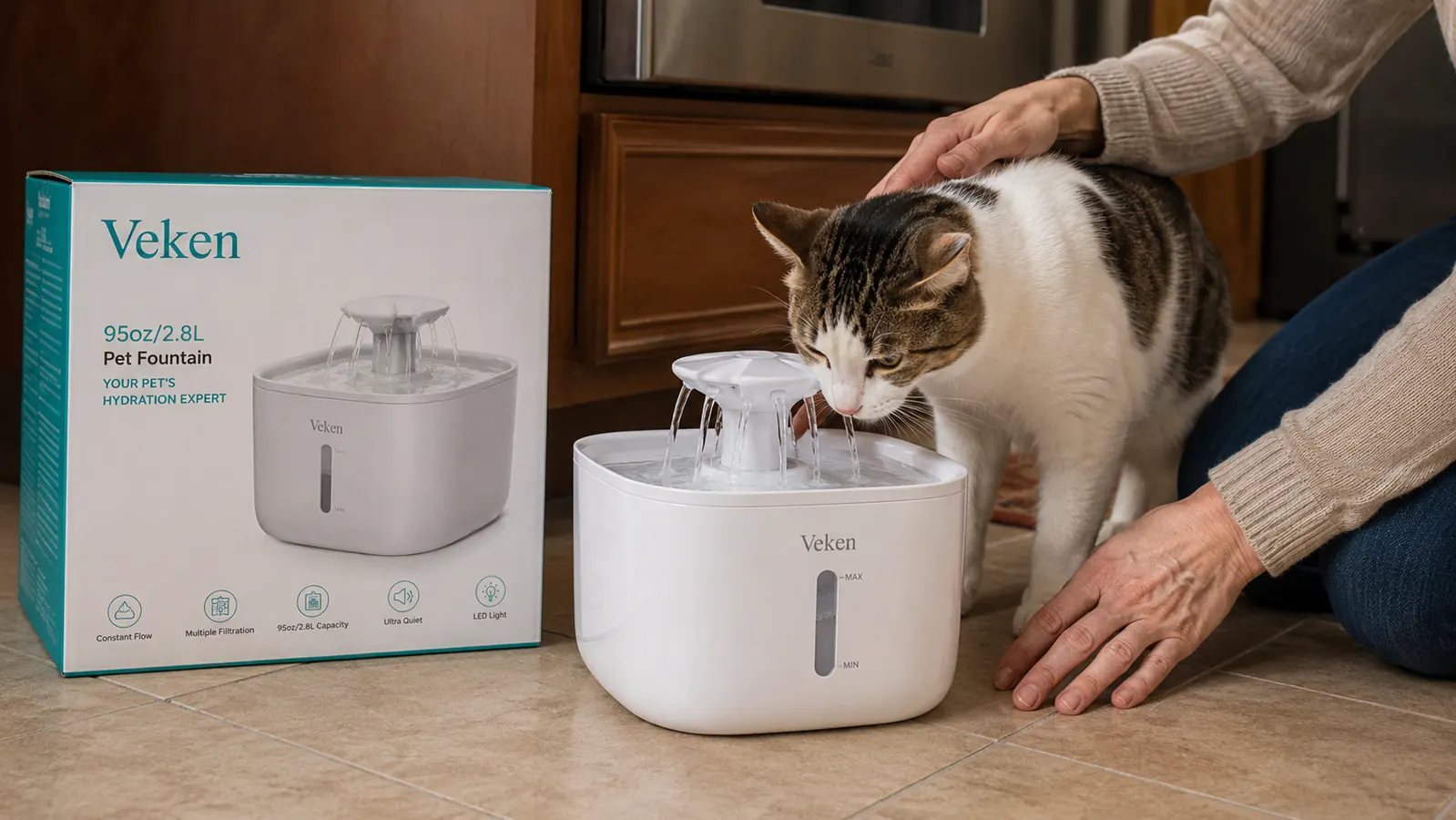
Where the Bowl Still Holds Its Own
I want to be fair here, because a bowl is genuinely not wrong for every household. If you have a dog who drinks vigorously and frequently regardless of water movement, a large stainless or ceramic bowl is simpler, cheaper to run, and takes thirty seconds to clean. Dogs are generally less hardwired against still water than cats are. My terrier mix, Pickle, would drink from a puddle given the chance. For him, the fountain is a pleasant bonus, not a necessity. If you are a dog-only house and your dog has no drinking hesitation, the bowl is the rational choice.
The bowl also wins on upfront simplicity and portability. There is no pump to prime, no filter to install, no power cord to route along the baseboard. You fill it, set it down, and you are done. If you travel frequently and want something you can leave with a neighbor who has no patience for instructions, a big stainless bowl with a slow-drip gravity feeder is foolproof in a way that no fountain is. The Veken setup takes about ten minutes and is genuinely straightforward, but it is still ten minutes of explanation and one more appliance to manage. And while the pump is impressively quiet at the lower flow setting, it is not completely silent. In a very quiet apartment or a bedroom with the door open, a sensitive sleeper might notice the faint hum. It has never bothered me, but it is worth knowing before you place it on a nightstand.
The ongoing filter cost deserves a clear-eyed look too. Replacement filters run around three to four dollars each and should be swapped every four weeks for one or two cats. Over a year, that is roughly forty to fifty dollars in consumables on top of the original purchase. If your cat drinks happily from a bowl without complaint, spending fifty extra dollars a year on a fountain she may ignore is not a smart move. But for cats who under-drink, that filter cost is cheap compared to a single vet visit for a urinary blockage or a month of prescription kidney diet.
A bowl is fine for a dog who drinks like he means it. For a cat who barely touches still water, a fountain is not a luxury. It is the fix.
The Bacteria and Cleanliness Reality
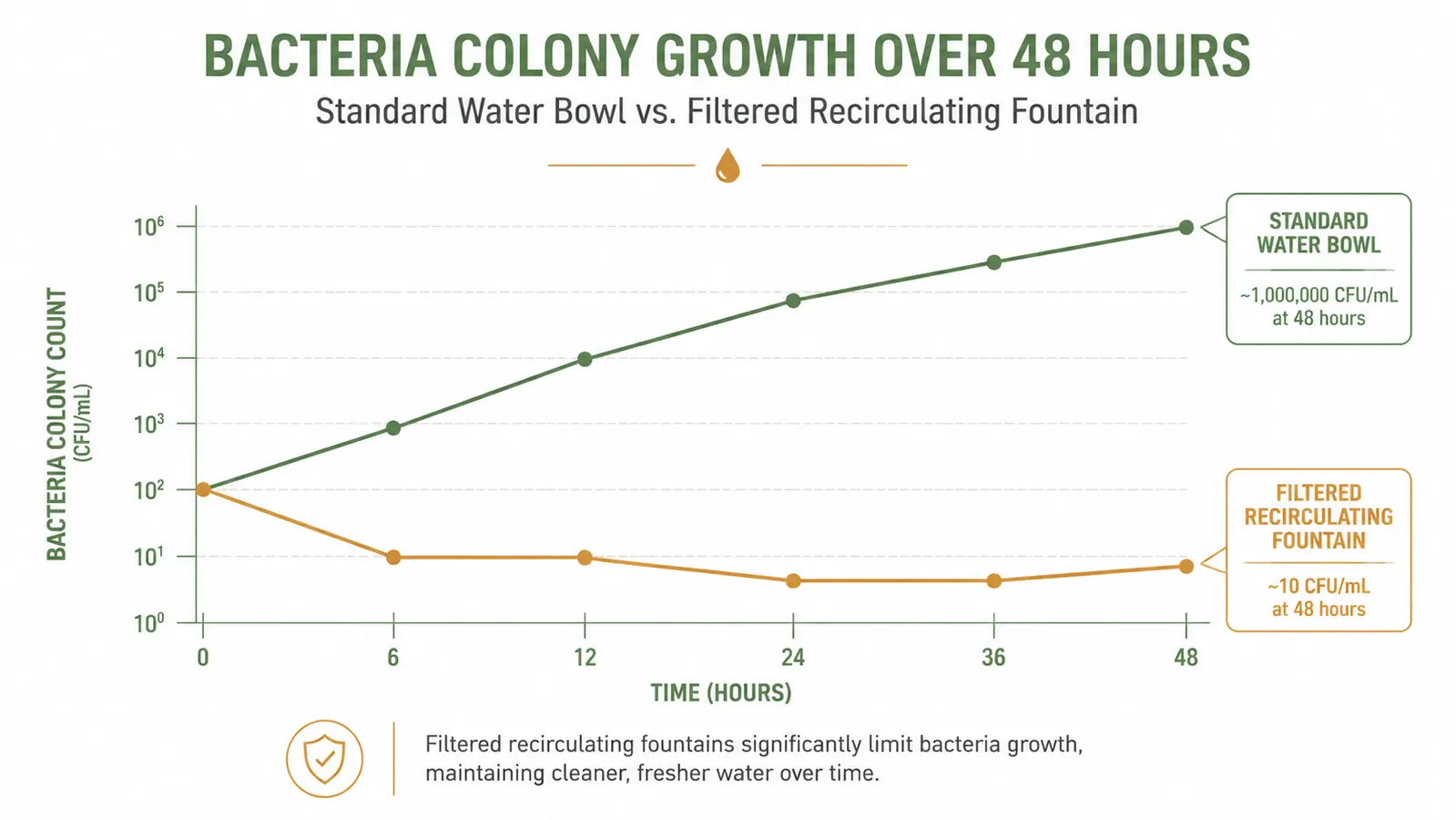
This one surprised me when I started paying attention to it. Still water in a bowl develops a thin biofilm layer within twenty-four to forty-eight hours at room temperature. You can sometimes see the slight slickness on the bowl walls if you wait a few days between proper scrubs. That biofilm is not necessarily dangerous in small amounts, but it is a chronic low-level contamination that compounds over time, especially if you are rinsing the bowl rather than washing it with soap and a brush every single day. Most of us rinse. Very few of us scrub daily the way we should.
The Veken's carbon and ion-exchange filter actively removes chlorine, heavy metals, and organic particles while the circulation slows biofilm formation by preventing water from sitting still long enough to stagnate. That said, the fountain is not maintenance-free, and treating it like it is will cause problems. The pump impeller housing and the reservoir walls still need a thorough disassembly and scrub every week. If you skip the weekly clean, algae can appear, particularly in warm sunny spots. I keep mine in a shaded kitchen corner, clean it every Sunday morning, and have never seen algae. But reviews from owners who placed their fountain near a window or went two weeks between cleans tell a different story. The bottom line is that both options require consistent habits. The fountain just gives you more margin on the days when life gets in the way.
Who Should Buy the Veken Fountain
Buy the Veken fountain if you have one or more cats who drink less than you would like, if your cat has had any urinary or kidney issues flagged by a vet, or if your cat consistently shows more interest in faucet water than bowl water. That last behavior is a dead giveaway. A cat who follows you to the sink and begs for a trickle is telling you exactly what she needs. The fountain replicates that signal, passively and continuously, without you having to stand there running the tap. At its current price, it costs less than a single vet visit and far less than a prescription kidney diet, and it addresses the root problem rather than just managing the symptoms.
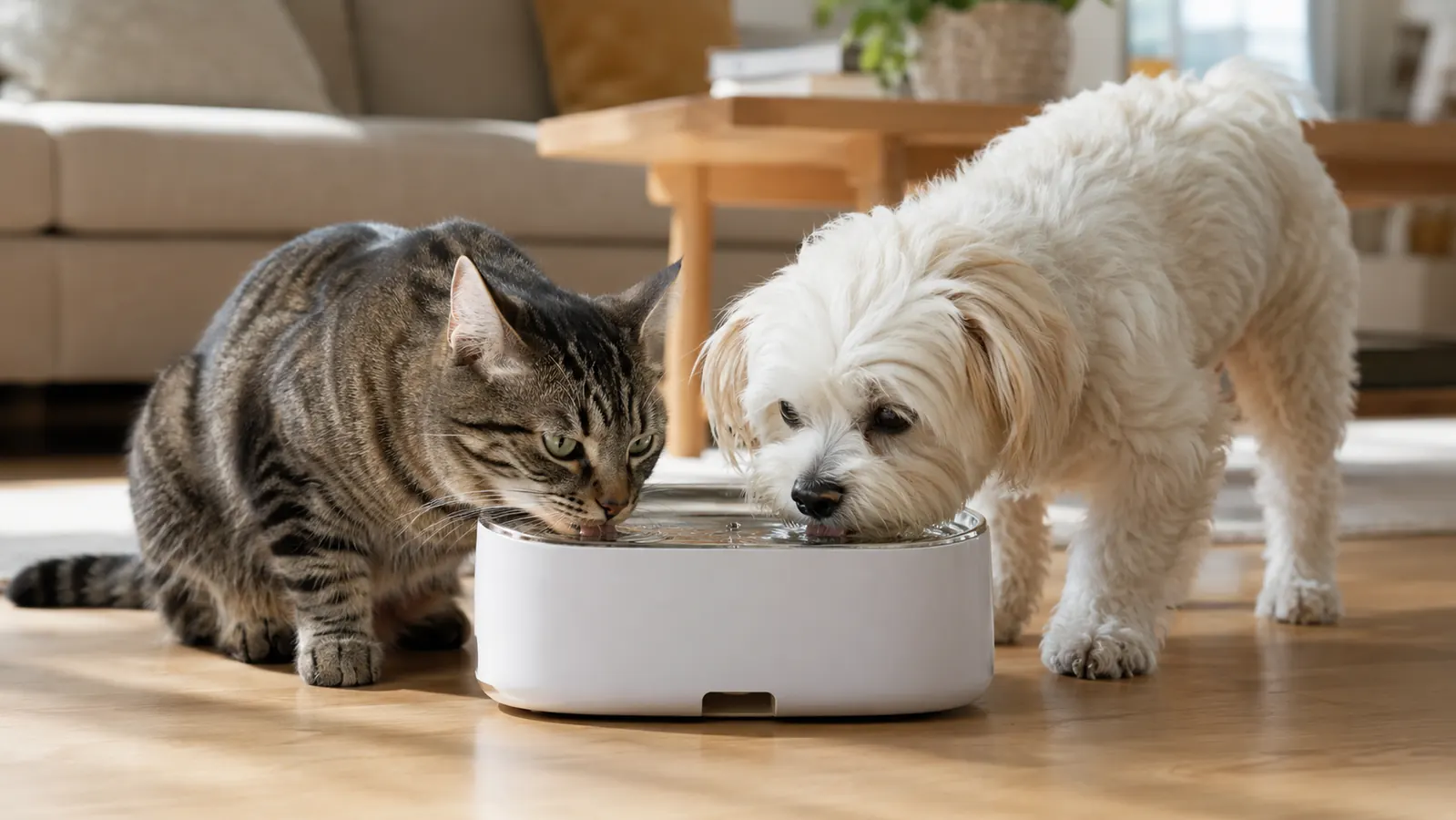
The fountain also makes practical sense for multi-pet households. Miso and Fig both started drinking more noticeably within the first week, and Pickle uses it opportunistically without any issue. One unit handles three animals comfortably, going two to three days between refills with zero fighting over water access. That simplification of the daily routine is genuinely underrated when you are managing multiple animals with different needs.
Who Should Stick with a Bowl
Stick with a bowl if your household is dog-only and all your dogs drink readily and frequently from still water. Stick with it if routing a power cord is genuinely impractical in your space, or if you want zero recurring costs and the simplest possible setup. And stick with it if your cat truly drinks well from a bowl and your vet has no concerns about hydration, kidney function, or urinary health. Some cats are not picky about water movement. If bloodwork is clean and the vet is not nagging you about kidney values, there is no urgent reason to add complexity to your routine.
The bowl is also the clear winner for travel, camping, or any situation where you need gear that works anywhere without power. A stainless bowl fits in any bag and needs no instructions to operate. The Veken disassembles into compact pieces and packs reasonably, but it is a fountain you plan around, not one you grab on the way out the door. Know your household, know your animals, and make the call that fits your actual life rather than the one that sounds most impressive on paper.
Over 49,000 cat owners switched from the bowl. Most say they wish they had done it sooner.
The Veken 95oz fountain ships with two filters and handles one to three cats comfortably for days between refills. If your cat under-drinks, this is the lowest-cost, lowest-risk fix you can make right now.
Amazon Check Today's Price on Amazon →