
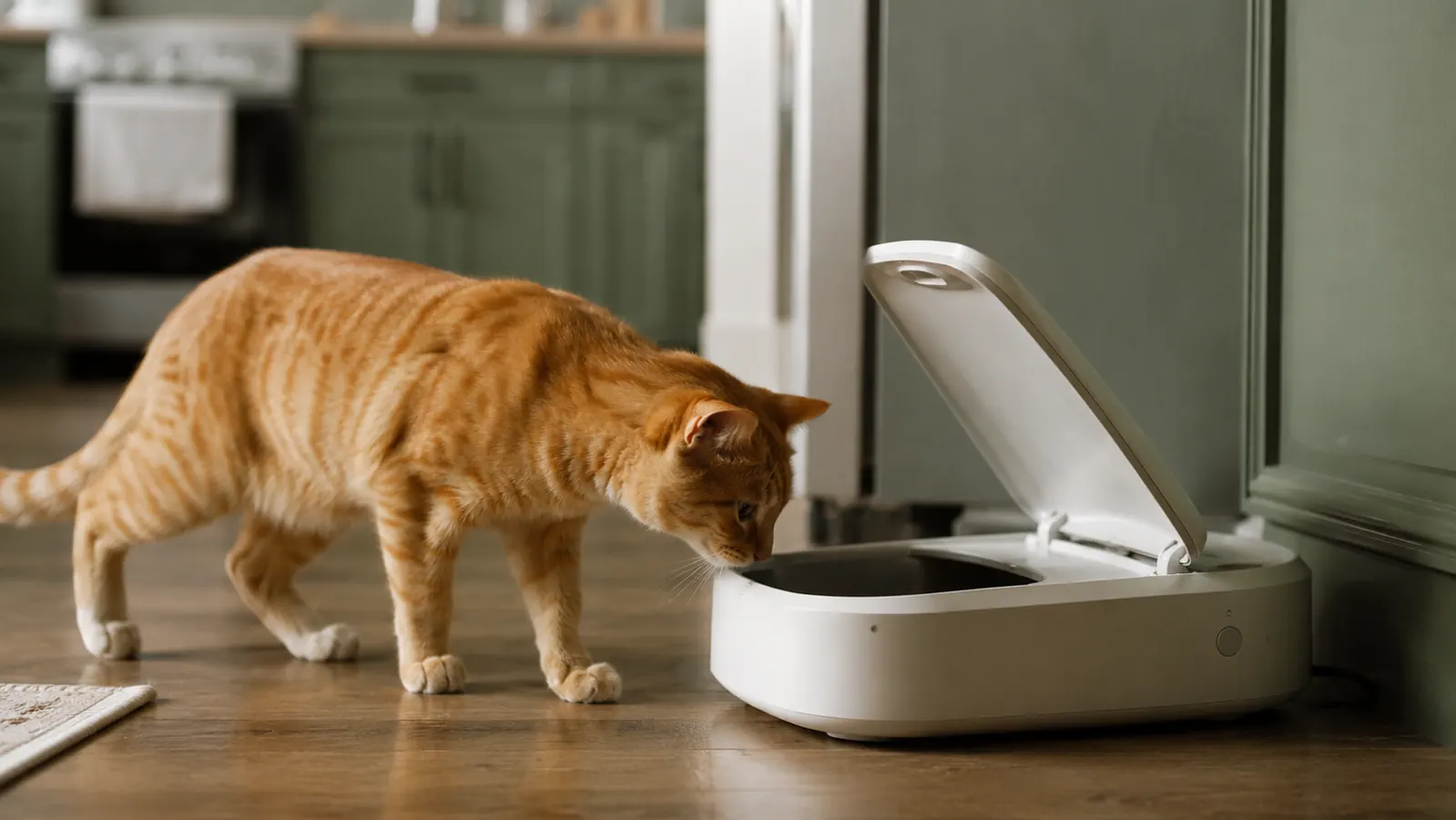
Here is the version of the PETLIBRO RFID Automatic Cat Feeder review that the product listing will not show you. The 4.2 stars and the 19,000-plus ratings are real, and this feeder genuinely earns them in the right household. But the 5-star crowd tends to skip the part where setup took them three tries, or the part where their chunky cat figured out a workaround in week two, or the part where there is a gap in the sensor housing that starts smelling funky if you do not break out a bottle brush every single week. I have been running two of these units daily in a two-cat home, and I want to give you the whole picture before you spend the money.
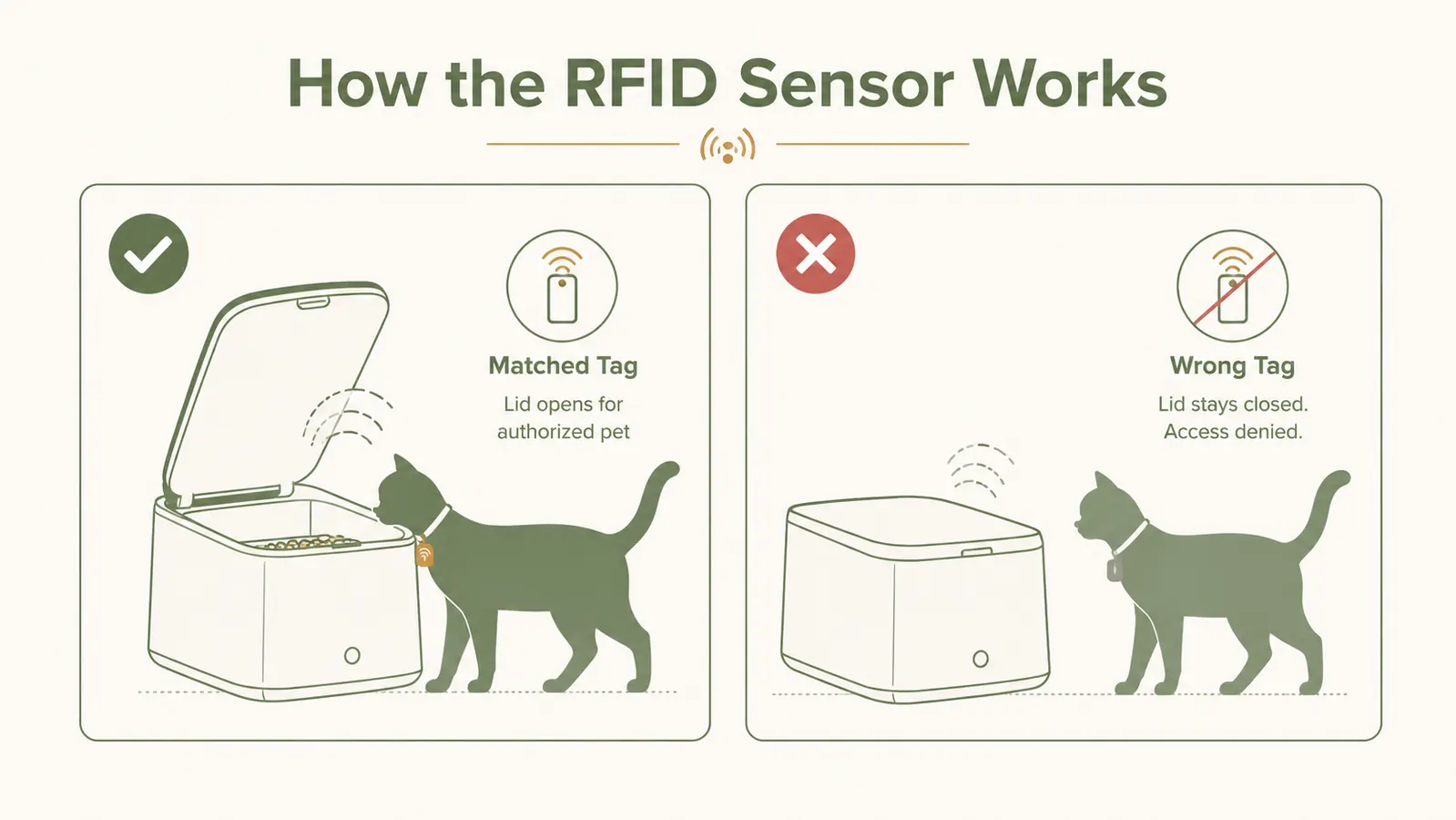
The short version: the PETLIBRO RFID feeder does the one thing no standard timed feeder can do, which is read each individual cat's collar tag and serve only that cat from that bowl. That matters enormously if you have two cats on different portion plans. But the path to getting there involves friction you should know about going in.
The Quick Verdict
A genuine solution to the multi-cat portion problem, held back by a fiddly app setup, a cleaning gap that traps food residue, and a collar tag that challenges chunky-collared cats. Worth it, but go in with clear expectations.
Amazon Check Today's Price →Your food-stealing cat has outsmarted every feeder you have tried. This one is the one that actually closes when the wrong cat shows up.
The PETLIBRO RFID feeder has 19,000-plus Amazon ratings and a 4.2-star average. Check the current price before you decide.
Amazon Check Today's Price on Amazon →The Setup Experience: What the Instructions Leave Out
Let's start here because setup is where most of the early frustration lives, and it is almost entirely preventable if someone tells you the key step in advance. The in-app setup prompts walk you through pairing as though it is a linear process. It is not. You have to connect your phone's WiFi to the feeder's temporary broadcast network first, in your phone's system settings, before you go back to the PETLIBRO app to complete pairing. The app prompts suggest doing it inside the app itself, which loops and fails. I went through the full sequence twice, got error messages both times, and only got it working when I ignored the app and went to my phone's WiFi settings first.
Once you know that, pairing takes about ten to twelve minutes per unit. For two feeders that is close to half an hour just for connectivity, not counting RFID tag registration. Tag registration itself is smooth: you hold the tag near the sensor, the app beeps, done. But the WiFi pairing step is genuinely underdocumented. Read the paper card that ships inside the box rather than trusting the in-app flow, and you will save yourself a frustrating half hour.
One more setup note: the feeder requires a 2.4GHz WiFi network. If your router broadcasts only 5GHz, or if it broadcasts a combined band, the feeder will not connect. I had to temporarily split my router's bands to create a visible 2.4GHz-only network. This is increasingly common with newer mesh routers, and it is worth checking your network specs before the feeder ships.
The Collar Tag: Honest Notes on Size, Fit, and What Breaks the System
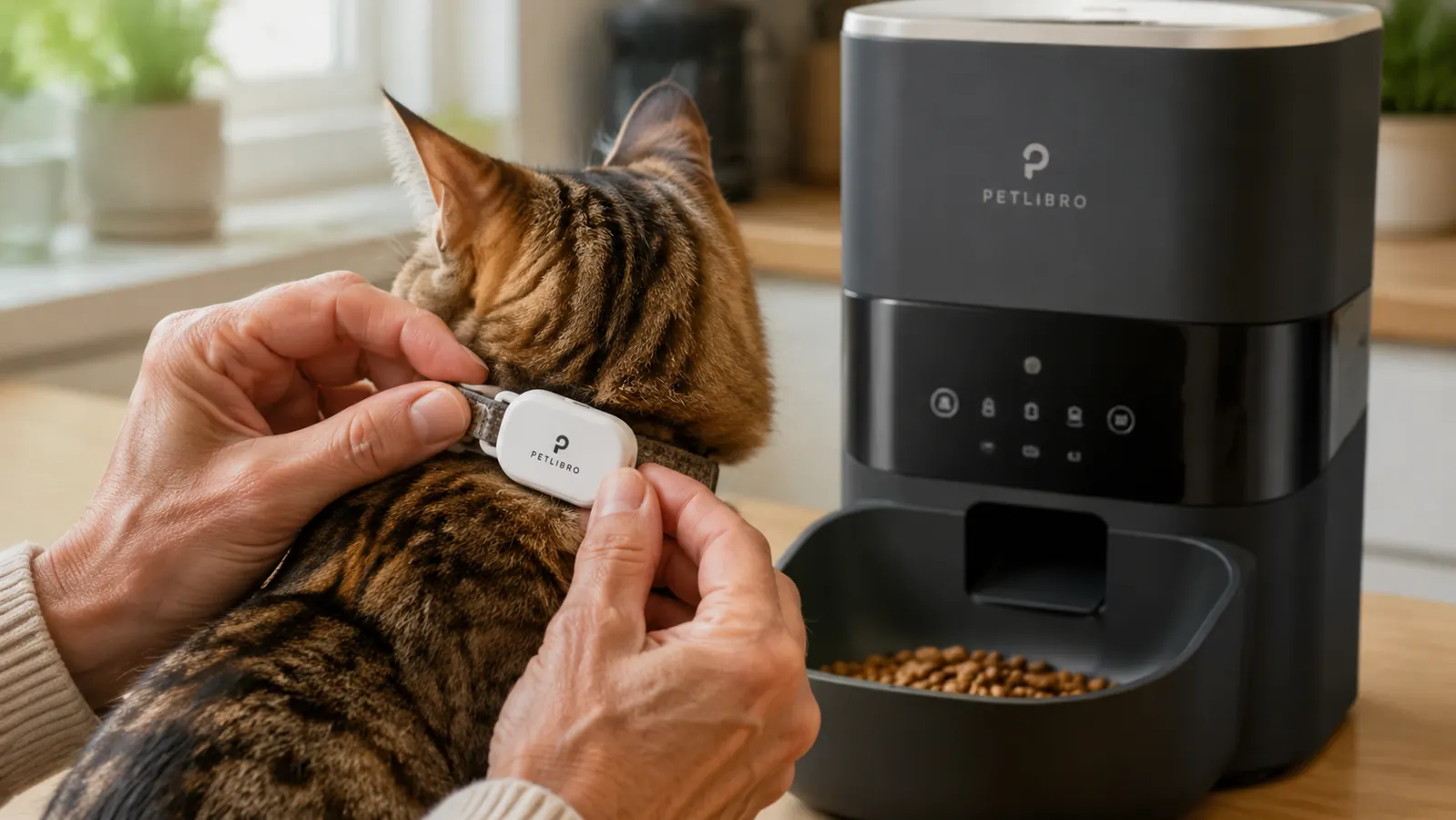
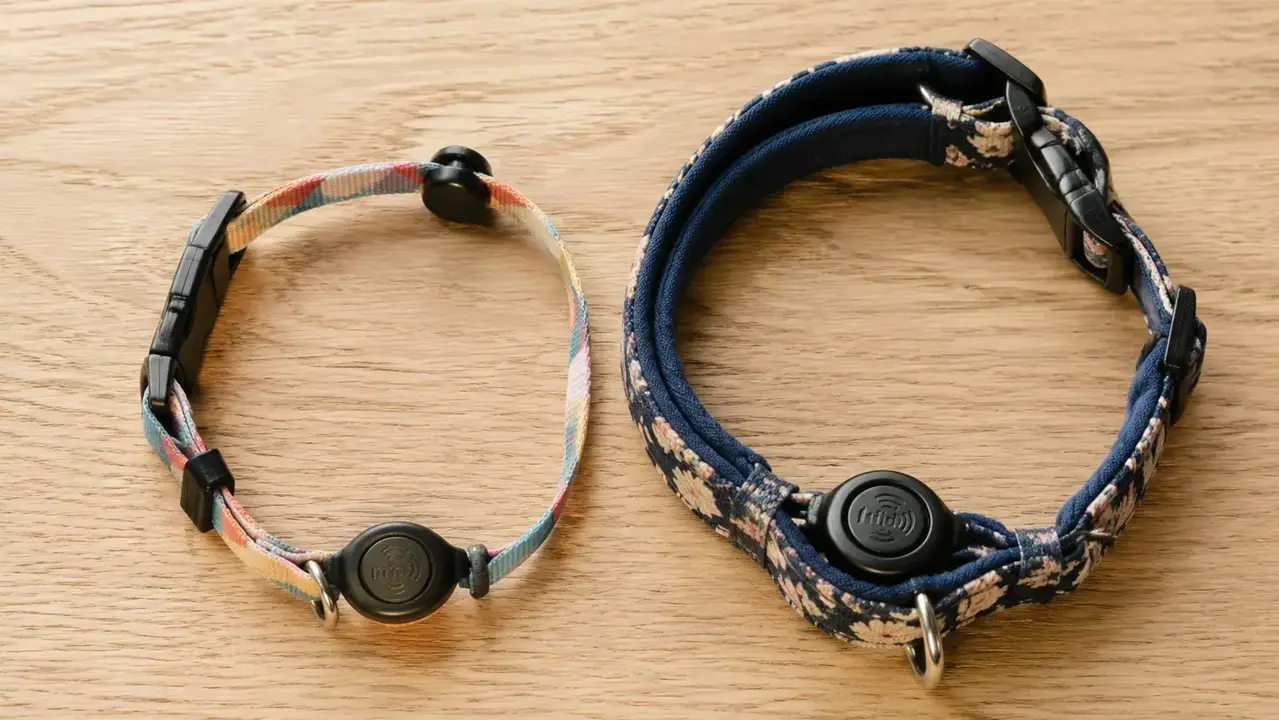
The RFID collar tag is not as small as the product photos make it look. It is roughly the size of a car key fob, and while it clips onto most collars without too much trouble, how it sits matters. On a thin flat nylon collar it lies flush and the sensor reads it cleanly. On a thicker padded or rolled leather collar it sits at a slight angle, and while it still reads in most cases, I noticed one or two missed sensor triggers per week on the thicker collar that I never saw on the thin nylon one. I switched one of my cats to a flat collar specifically for this reason.
The bigger vulnerability is cats who are determined collar-tag haters. The tag attaches via a clip, not a lock, so a cat who consistently pulls accessories off her collar will defeat this entire system. Before you buy, spend three days watching whether your cats tolerate things clipped to their collars. If they shake them off within an hour every time, this feeder will not work for you, full stop.
And then there is the workaround some cats discover. My larger cat, Biscuit, figured out after about three weeks that if she positioned her chin right at the bowl edge without her collar tag quite close enough to trigger a full open, the lid would sometimes flutter partially up. She never got a full meal that way, but she got a few stray kibbles. The sensor requires the tag within roughly two to three inches of the bowl for a clean read. A determined cat who learns to hover just outside that range can occasionally get lucky. It happens maybe twice a week, not twice a day, but it is worth knowing this is not a hermetically sealed system.
The RFID technology is real and it works reliably. But 'reliably' is not the same as 'perfectly.' A clever cat will find the edge cases.
The Cleaning Reality Nobody Mentions in Their Five-Star Review
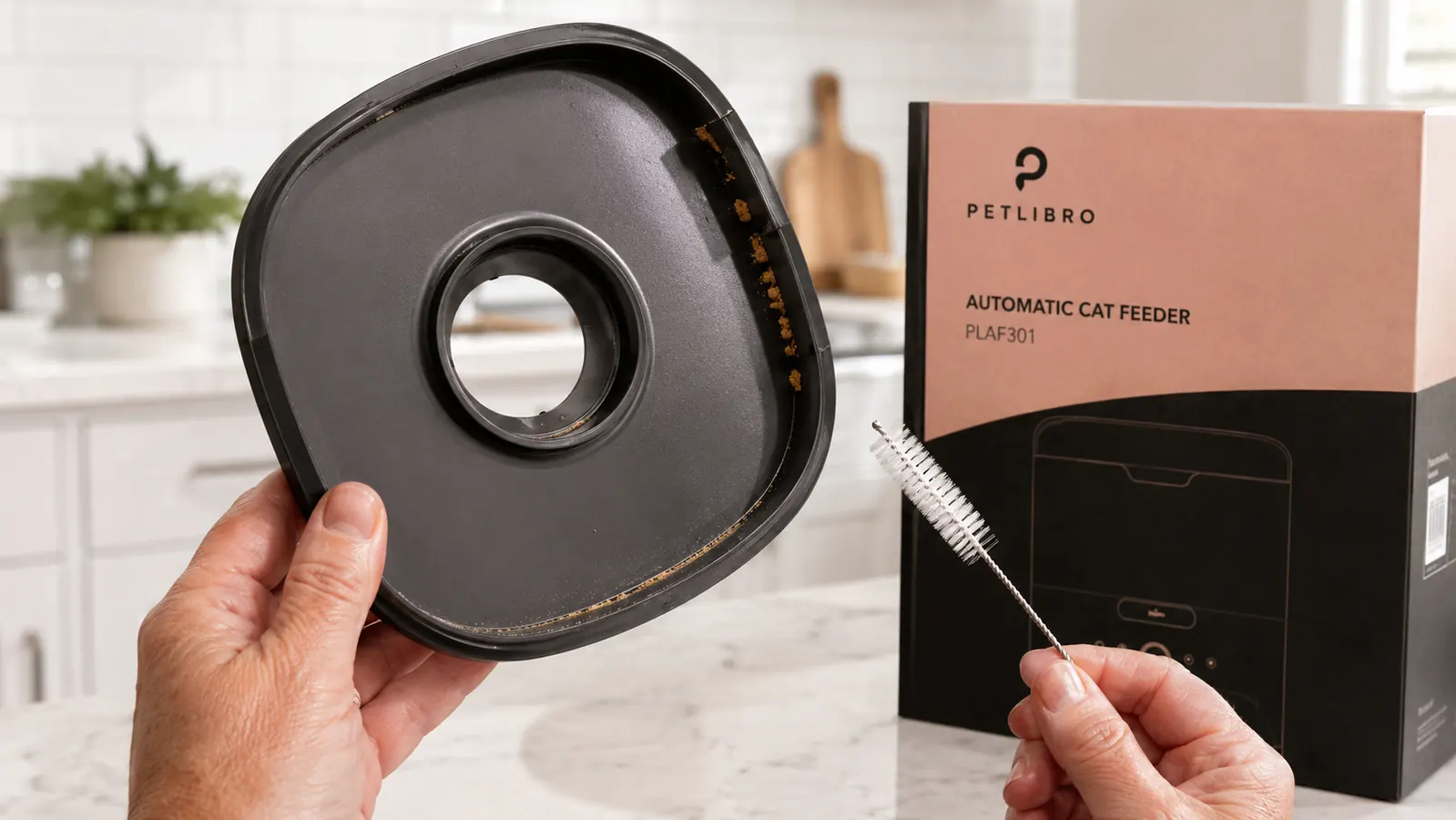
The bowl, the lid, and the food hopper are all dishwasher safe and come apart without tools. That part is genuinely convenient. What the product description does not mention is the narrow gap that runs along the inner rim of the RFID sensor housing around the bowl opening. Dry kibble crumbs work their way into that gap during normal dispensing, and if you do not clear it weekly, the buildup will start to smell. Not immediately, and not strongly, but enough that you will notice it when you lean down to refill the hopper.
A thin bottle brush or a cotton swab gets into the gap without much trouble, and once you know the step exists it adds maybe three minutes to your weekly cleaning routine. But it is a hidden maintenance task that the manual does not document, and a fair number of negative reviews about smell are almost certainly this issue rather than any defect with the unit itself. Consider it part of the ownership experience.
The food hopper is another area worth mentioning. It holds a reasonable amount of dry kibble, enough that I refill it every seven to ten days depending on which cat I am loading it for. The opening is wide enough to pour from most standard kibble bags without a scoop or funnel, which is a small thing that makes a real difference at 6am. The hopper is also opaque, so you cannot see the fill level without lifting the top. I added a weekly hopper-check to my fridge whiteboard after running one unit dry mid-week without noticing.
App and Notifications: Better After Firmware Updates, Still Not Polished
The PETLIBRO app does what it needs to do: schedule meals, set gram amounts per meal per cat, log when the lid opened and which tag triggered it. The interface is functional but it feels like it was designed by engineers, not product designers. Buttons are small, the navigation between units requires more taps than it should, and the notification settings are buried three levels deep.
The missed-meal notifications, which alert you when a cat does not trigger the sensor within a scheduled meal window, were the least reliable part of the experience for the first several weeks. They would arrive late, arrive twice, or occasionally not arrive at all. A firmware update that pushed automatically in my second month improved this significantly. I have had no missed or duplicate notifications since. But if you are a first-week user wondering why your alerts feel unreliable, a firmware update is likely coming and it does fix the issue.
One thing the app does very well: the meal history log is timestamped and shows which RFID tag triggered each opening. I started screenshotting the weekly log to share with my vet at check-ins, and she found it genuinely useful. If you have a cat on a vet-managed diet plan, this log alone is worth something.
Noise Level and the Sound Your Cat Will Have to Learn to Ignore
Nobody talks about the noise, so I will. The lid motor makes a distinct mechanical click-whir when it opens and closes. During the day you will not notice it. At 6am on a quiet morning, with the feeder on a hardwood floor in the kitchen adjacent to your bedroom, you will hear it. I moved both units to the far end of the kitchen after the first week because the lid cycle was waking me up at scheduled meal times.
It is not loud by any measure. It is about the same volume as a microwave door latch. But if you are a light sleeper and the feeder is anywhere near your bedroom, plan your placement accordingly before the first morning feeding goes off at 6am. Tile floors also echo the motor sound slightly more than carpet or a silicone mat, so putting a small mat under the unit reduces the sound somewhat.
Both my cats were startled by the lid opening during their first two or three feedings and walked away without eating. By day four, neither cat cared. If you have an especially skittish cat, build in a few days for the sound acclimation period and do not panic if initial meal acceptance is low.
What I Liked
- RFID collar sensing genuinely prevents bowl-stealing in a multi-cat household and works reliably once set up
- Portion accuracy is tighter than hand-measuring, within one to two grams across repeated real-world use
- Meal history log with timestamps is shareable with a vet, useful for cats on managed diet plans
- Dishwasher-safe bowl, lid, and hopper make core cleaning straightforward
- Battery backup keeps scheduled feedings running through brief power outages
- Firmware updates have improved notification reliability significantly since launch
Where It Falls Short
- WiFi pairing requires a non-obvious step through phone system settings that the in-app prompts do not explain clearly
- Requires 2.4GHz WiFi only, which is a problem with some modern mesh routers
- Collar tag sits at an angle on thick padded collars, occasionally causing missed sensor reads
- Narrow gap in the RFID sensor housing collects food crumbs and needs weekly bottle-brush cleaning not mentioned in the manual
- Lid motor sound is audible at quiet early-morning feeding times, plan placement away from bedrooms
- Determined cats can occasionally get the lid to flutter by hovering at the edge of sensor range
Who This Is For
You should buy the PETLIBRO RFID feeder if you have two or more cats on different calorie or diet plans and you are currently trying to manage that by hand or by keeping the cats in separate rooms at mealtime. Separate-room feeding is the most common workaround I hear from multi-cat owners, and it is exhausting. The RFID system replaces room separation with a sensor that does the job automatically. You should also buy it if you travel regularly and want a verifiable meal log rather than just trusting that a pet sitter eyeballed the right portion. And you should buy it if your current timed feeder has a food thief problem, meaning one cat reliably eats from the other cat's bowl before the other cat gets there. That specific problem is exactly what this product was built to solve, and it solves it well. For more context on whether the RFID version is right for your specific situation versus a simpler timed option, my full breakdown of the PETLIBRO RFID versus a standard auto feeder walks through the decision criteria in detail.
Who Should Skip It
Skip this feeder if you have a single cat on no particular diet plan. The RFID technology is the premium you pay, and a single-cat household has no use for collar-based bowl access control. A basic programmable feeder at a fraction of the cost will give you scheduled meals and portion control without the setup complexity. Also skip it if your cat lives in a mostly wet-food household. This dispenser is dry kibble only and semi-moist food will cause jams. And if your cat cannot or will not tolerate something clipped to her collar consistently, the core technology simply will not function. Test collar tolerance before you buy. You also do not want this feeder if you need an instant out-of-box experience with zero learning curve. The setup requires patience and a little troubleshooting tolerance. If that frustrates you at a product level, there are simpler feeders worth considering. The full long-term use breakdown covers the durability side in more depth if that is your main concern before committing.
If you have two cats on different diets and separate-room feeding is your current solution, this feeder is purpose-built for that exact situation.
Over 19,000 verified Amazon buyers have rated the PETLIBRO RFID feeder. Check today's price and see whether the current deal makes sense for your household.
Amazon Check Today's Price on Amazon →