
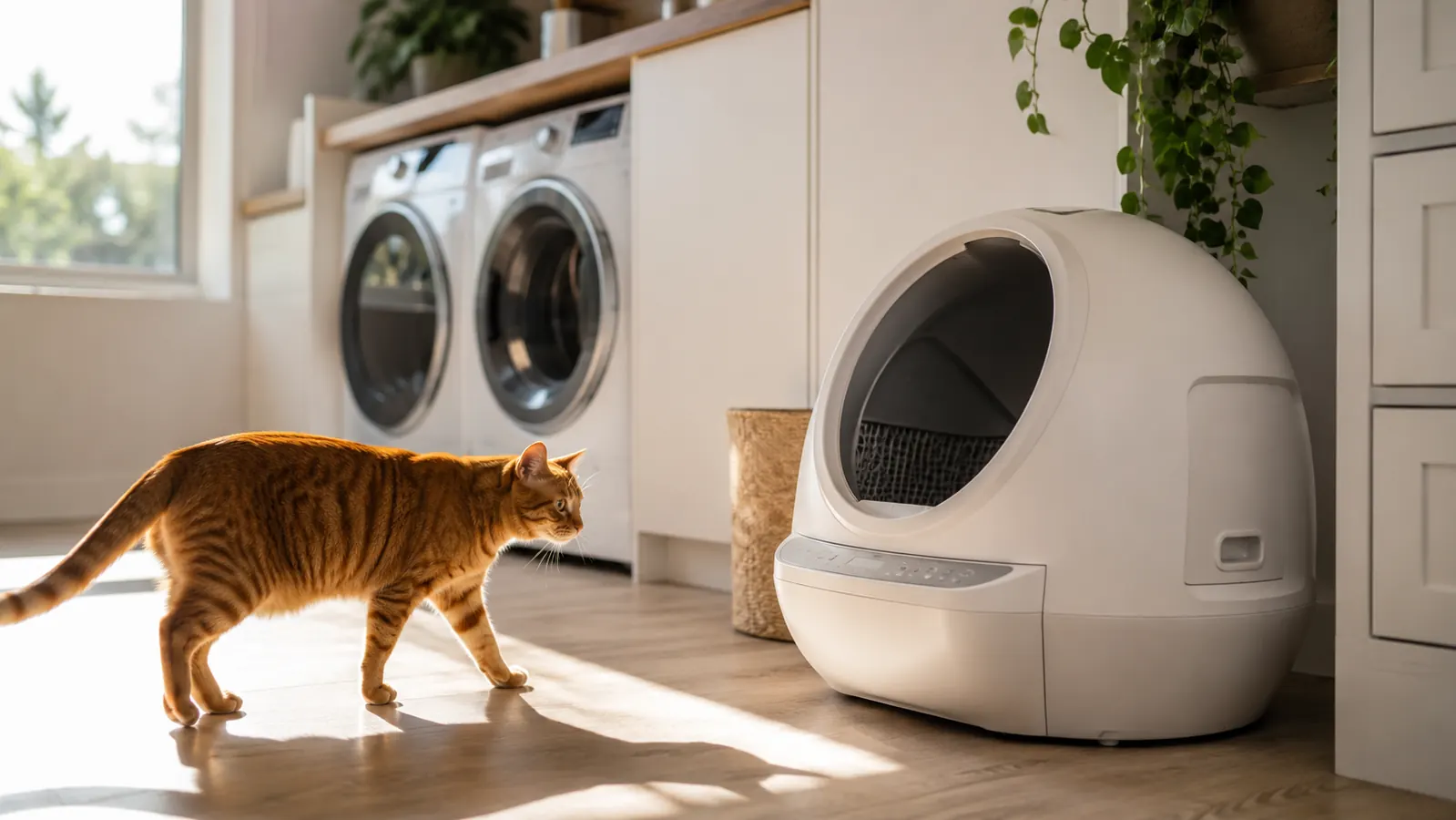
I have two cats, Pepper and Fig. Pepper is nine years old and has used the same covered litter box since she was a kitten. Fig is four and thinks he owns every square inch of the apartment. When I brought home the Fumoi Automatic Cat Litter Box, I fully expected at least one of them to stage a protest, and by protest I mean find somewhere else to go. That is the single biggest fear with any litter box switch, and it is a legitimate one. Cats eliminating outside the box is not just an odor problem; it is a sign that something about the setup made them feel unsafe or confused. The good news is that with the right transition plan, most cats accept a self-cleaning box without drama. This guide covers exactly what worked for us and the common mistakes that trip people up.
The Fumoi large-capacity self-cleaning litter box works by running a slow raking cycle after your cat exits, depositing clumps into a sealed waste drawer. It has a motion sensor that detects when a cat is inside and delays the cleaning cycle until a safe window has passed. That sensor is important to understand before you start the transition, because it is often the thing that startles cats and derails the whole process. The approach I am about to walk you through accounts for that, and it is the reason neither Pepper nor Fig had a single accident during the switch. If you want the full breakdown of how the Fumoi holds up over time, I covered it in detail in my long-term review.
Your cat deserves a box that handles the dirty work for you, not one that scares them away from it.
The Fumoi self-cleaning litter box has a 4.2-star rating across more than 3,000 owners. Large capacity, app monitoring, and a quiet raking cycle designed to not spook cats during or after the transition.
Amazon Check Today's Price on Amazon →Step 1: Pick the Right Spot Before You Unbox Anything
Location matters more than most people expect. Cats are particular about where they eliminate, and if you put the new box in a spot they never visit, the transition starts with a disadvantage built in. The safest move is to place the Fumoi self-cleaning litter box in the exact same location as the current box, or as close to it as the box's footprint allows. Cats navigate by muscle memory, especially at night, and finding the new box in a familiar spot dramatically reduces the learning curve.
Before placing it, make sure the area has a stable power outlet within cord reach. The Fumoi runs on AC power, and routing an extension cord across a hallway is a tripping hazard you do not want to live with long-term. Also verify the floor is level, because an uneven surface can affect how smoothly the raking arm travels and how fully waste falls into the drawer. Two minutes with a level and a folded piece of cardboard under a corner, if needed, saves you from a jamming problem later.
If you have more than one cat and currently have multiple boxes, hold off on removing any of them until the Fumoi is fully accepted. The general rule from feline behaviorists is one box per cat plus one extra. During the transition, keep that count intact and let the Fumoi be an addition rather than an immediate replacement, until your cats are choosing it on their own. Rushing this phase is the number one reason transitions fail.
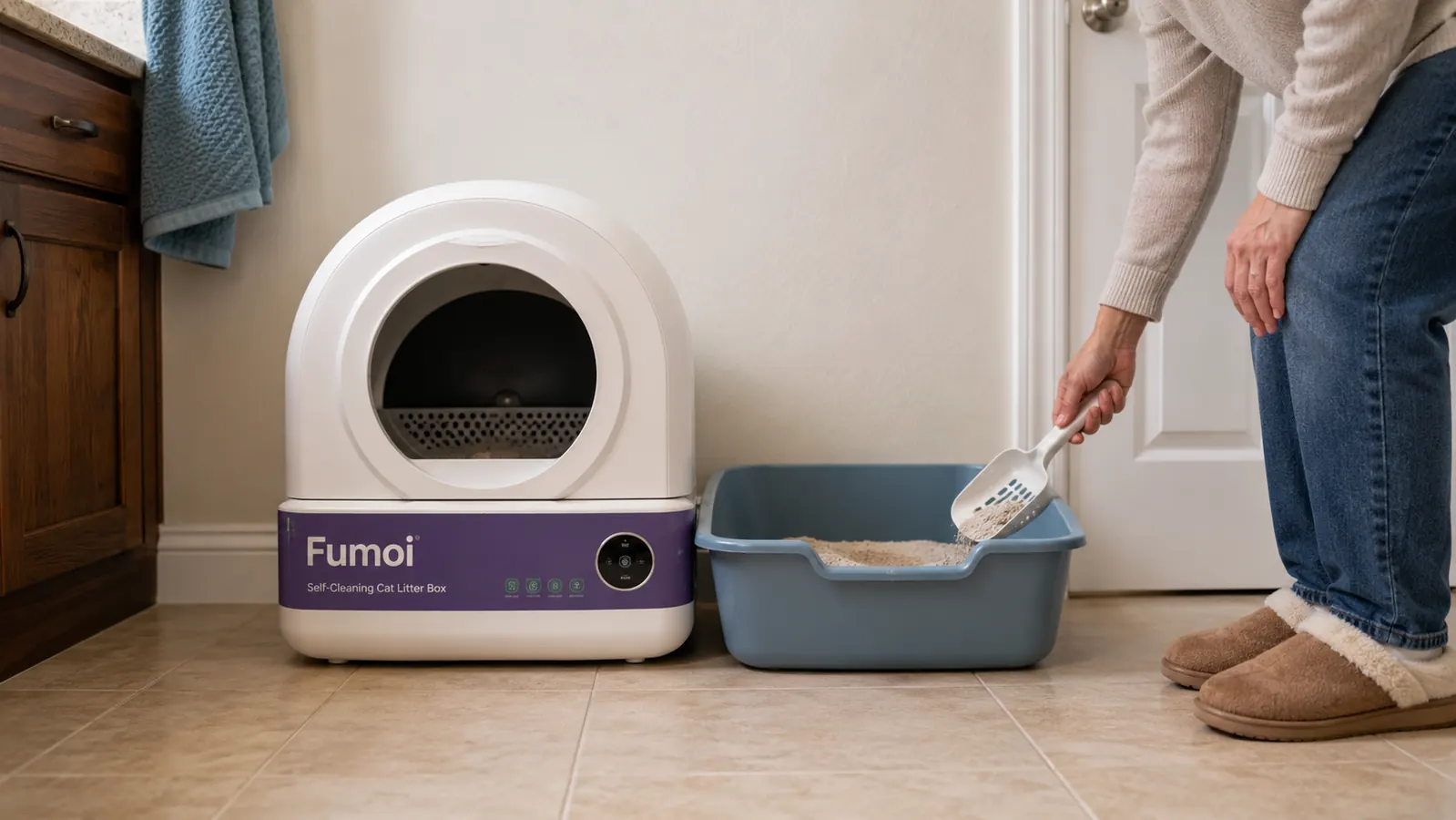
Step 2: Match the Litter and Let the Box Sit Unplugged for Two Days
The biggest transition mistake I see in online forums is plugging the box in on day one and walking away. Cats need to investigate a new object as a stationary, silent thing before they will trust it enough to step inside. Plug it in too soon and the first time your cat approaches, the sensor triggers a motor, the arm starts moving, and your cat is gone and not coming back anytime soon. Do yourself a favor and leave the unit unplugged for the first 48 hours. Let your cat sniff it, rub on it if they want, and develop the opinion that this large object is completely boring. That is exactly what you want.
Litter type matters just as much. The Fumoi works best with clumping litter, and the manufacturer recommends keeping the fill level between the marked minimum and maximum lines for the rake to work properly. But for the transition, the most important thing is to use the same brand and scent your cat already uses. Changing litter type and litter box simultaneously doubles the novelty and doubles the resistance. Start with what your cat knows. Once they are consistently using the Fumoi, you can experiment with a different clumping formula if you want. Not before.
Non-clumping litter and crystal litter are not compatible with the Fumoi's raking mechanism. If your cat currently uses either of those, you will need to do a separate litter-type switch beforehand and let that change settle before introducing the new box. Doing both switches at the same time is too much change at once for most cats.
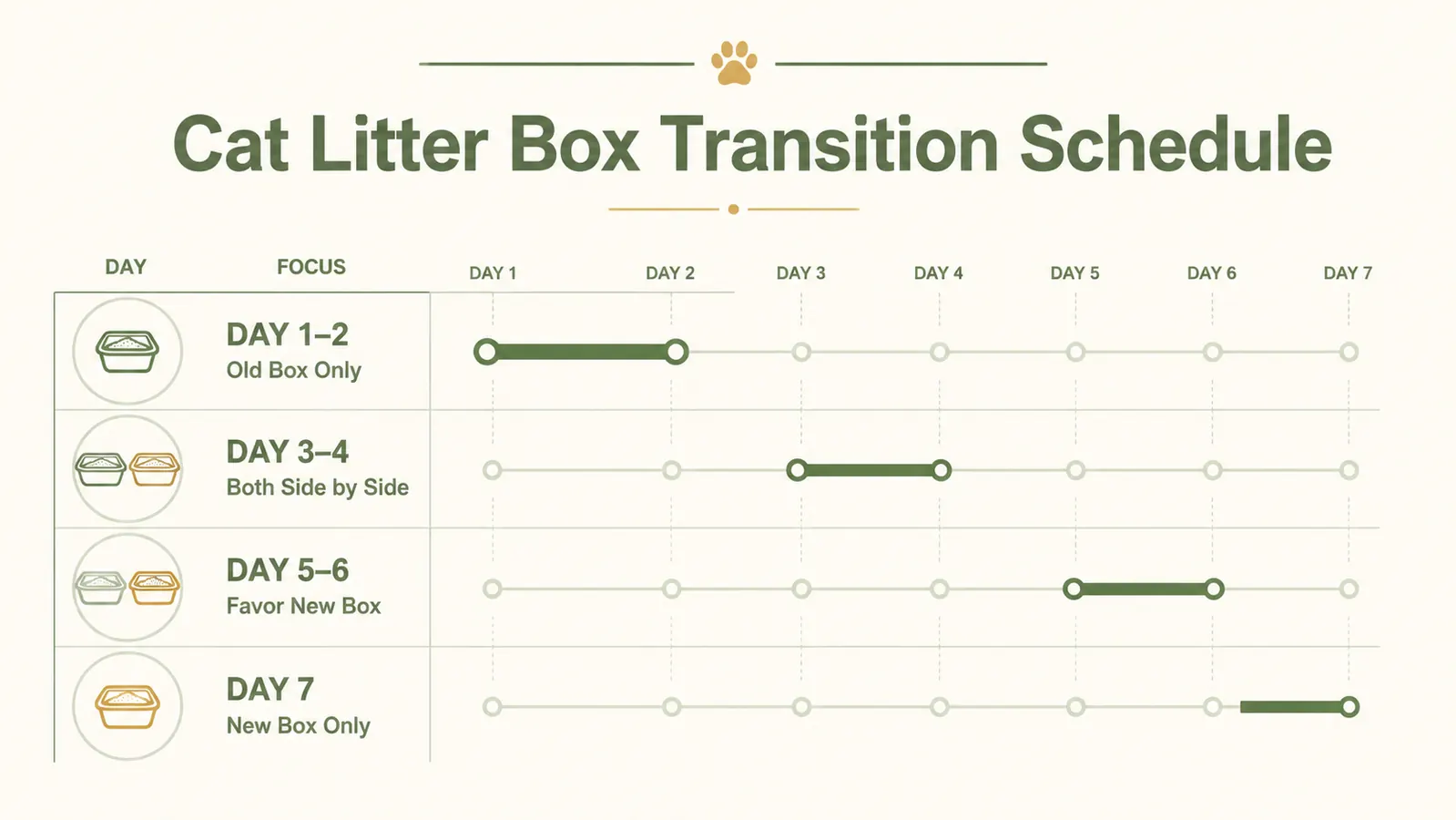
Step 3: Run Both Boxes Side by Side and Let Your Cat Choose
On day three, plug in the Fumoi but set it to manual cleaning mode if the app supports it, or at minimum extend the cleaning delay to something generous, like 30 minutes after exit, so the cycle never fires while your cat is nearby exploring. Keep the old litter box right next to it. Your cat will most likely use the old one first, which is fine. You are not trying to force a switch on day three. You are starting to build familiarity with the new unit as a safe, quiet object in a familiar space.
Scatter a small amount of used litter from the old box into the Fumoi. The familiar scent signals to your cat that this is an appropriate place to eliminate. Some cats walk right in on day one of this phase. Others circle it for four days before committing. Both are normal. Pepper walked in on day two of this phase. Fig held out for five days and then acted like he had been using it his whole life. Do not push it. The side-by-side phase can last anywhere from three days to two weeks, and the only wrong move is rushing it.
Scatter a small amount of used litter from the old box into the Fumoi. The familiar scent is the single fastest way to tell your cat that this new device is safe to use.
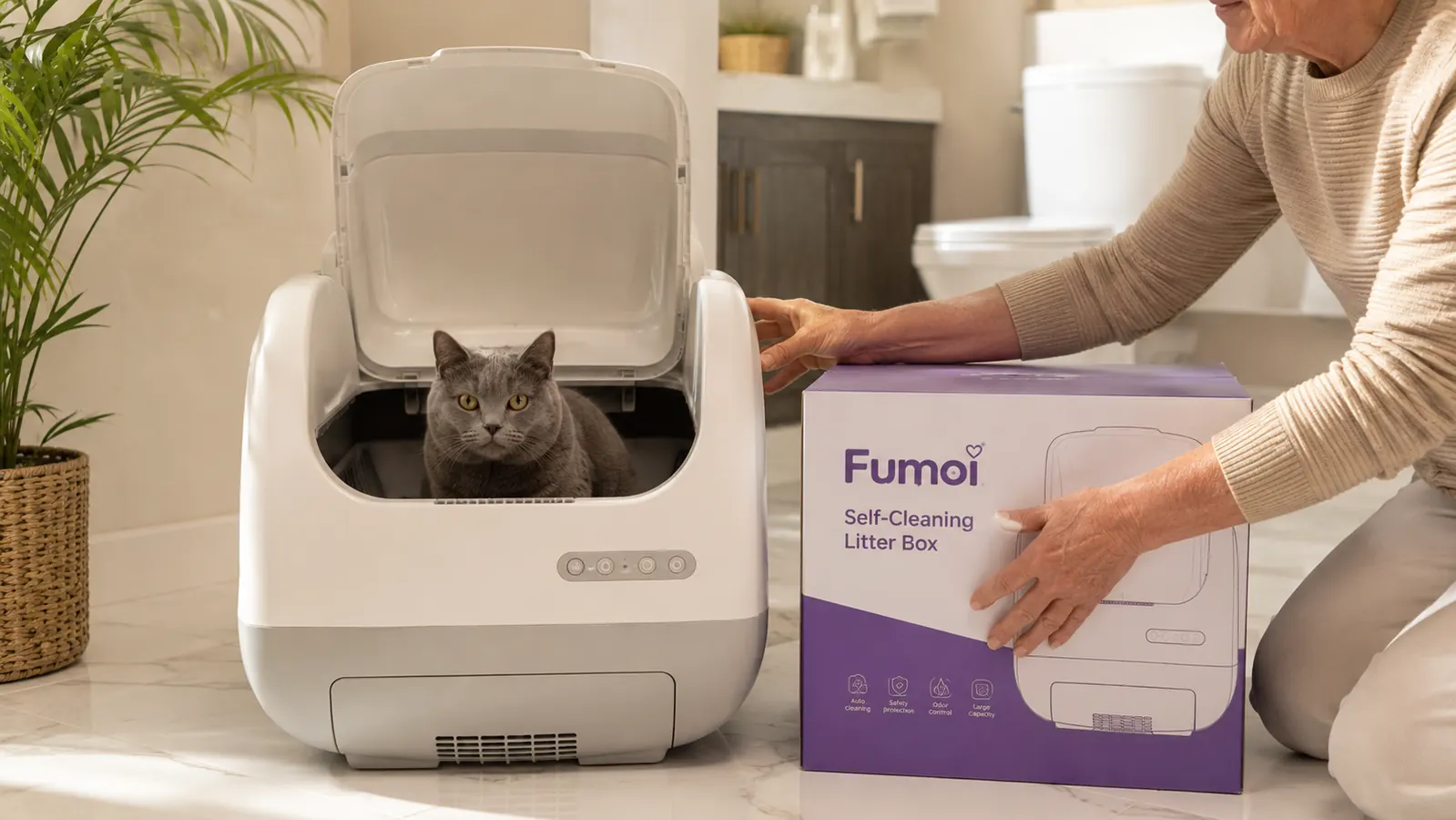
Step 4: Gradually Reduce Access to the Old Box
Once you are seeing your cat use the Fumoi regularly, even if they are still splitting time with the old box, you can begin making the old one less appealing. The cleanest way to do this is to stop cleaning the old box as often. Keep the Fumoi perfectly maintained and let the old one go a day or two without scooping. Most cats will migrate toward the cleaner option on their own. You are not trapping them; you are just making the choice obvious.
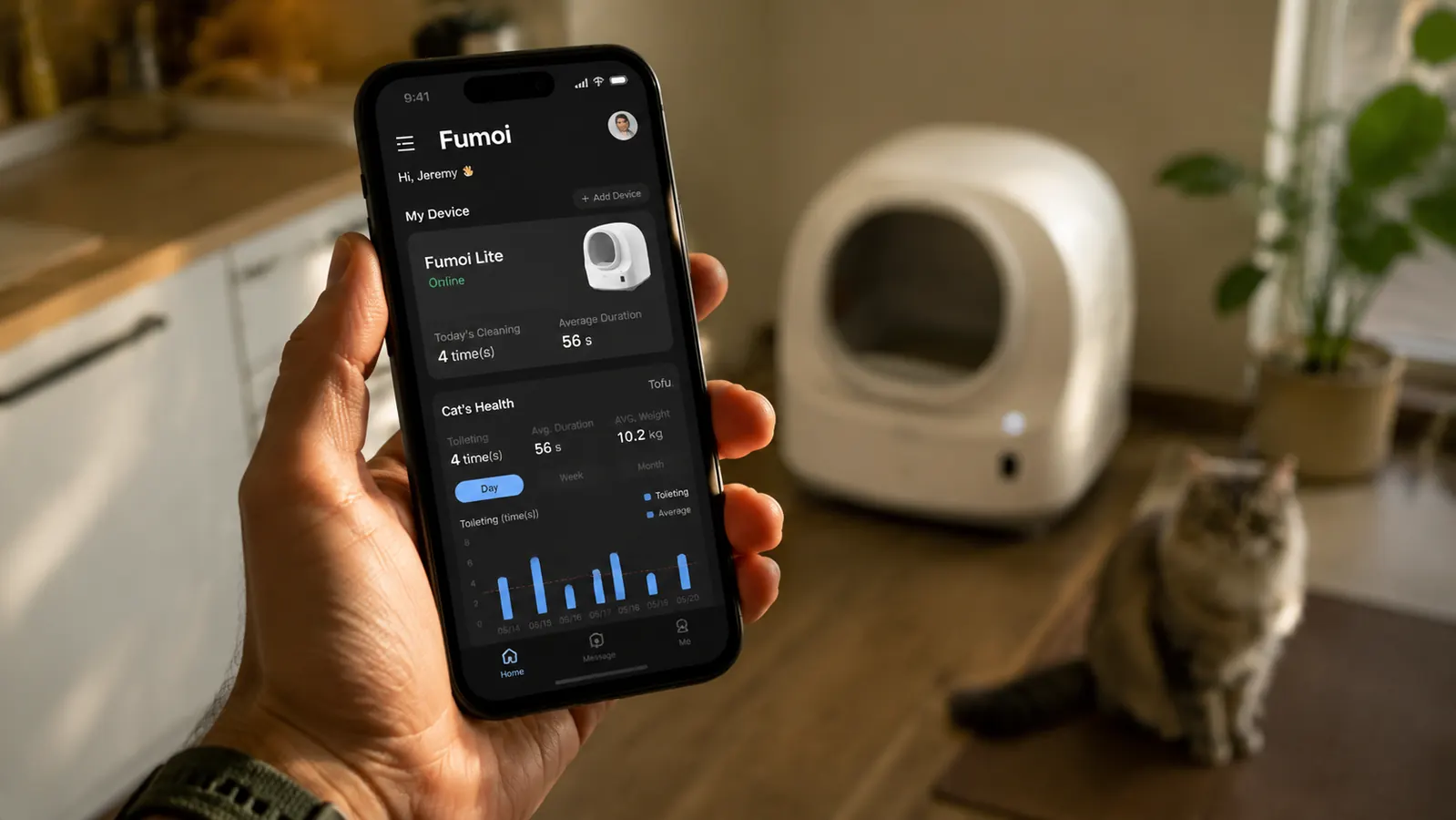
At this point you should also start paying attention to the Fumoi app or indicator light to confirm the cleaning cycles are running as expected. The app shows usage frequency per cat if you have set up multiple profiles, and that data tells you a lot about how the transition is going. If you see no uses logged on the Fumoi while the old box is clearly being used, your cat is still avoiding it for some reason. Go back to the unplugged side-by-side phase for another two days rather than continuing to push forward.
One thing worth mentioning: some cats are briefly startled the first time they hear the motor run after they exit the box. They may jump, stare at it for a while, or refuse to re-enter that day. This usually passes within 48 hours. If your cat seems genuinely stressed by the sound, you can extend the cleaning delay in the app settings so the cycle runs long after the cat has left the area entirely. Start with a 30-minute delay and shorten it gradually over a week once your cat has stopped reacting to the motor noise.
Step 5: Remove the Old Box and Monitor for the First Week
When your cat has been using the Fumoi exclusively for at least three to four days in a row, with no accidents and no obvious avoidance behavior, you can remove the old box. Do not throw it away yet. Store it somewhere accessible for another two weeks in case you need to reintroduce it. Reversals are uncommon at this stage but they do happen, usually triggered by something unrelated to the box itself, like a vet visit, a new person in the home, or a change in the household routine that stresses the cat temporarily.
For the first week after removing the old box, check the waste drawer every day even if the app says it is not full. You are looking for consistent use and normal clump sizes, which confirms the cat is hydrated, healthy, and that the raking cycle is capturing waste cleanly. If you see clumps getting dragged to the side rather than falling into the drawer, your litter level may have dropped below the minimum fill line. Top it up and the problem usually resolves on its own. The Fumoi's large-capacity drawer means I typically empty it once a week with two cats, but your frequency will depend on your cats' usage patterns.
What Else Helps the Transition Go Smoothly
A few smaller things made a real difference for us that do not fit neatly into any single step. First, avoid using any strong-scented cleaning products near the Fumoi during the transition. Some people spray down the surrounding area with a citrus cleaner right when they are setting up, thinking they are being thorough. Cats associate those sharp scents with avoidance, and it can slow the whole process by a week. Plain warm water is enough to wipe down the exterior. Second, if you have a multi-cat household where one cat bullies another at the box, a self-cleaning unit with app-based usage tracking helps you spot the problem quickly. You will see one cat logging far fewer visits than the other, and you can adjust placement or add a second unit before a chronic avoidance habit takes hold. Third, if your cat is older or has joint issues, pay attention to the entry opening height. The Fumoi has a fairly standard entry, but if your cat struggles to step up, a small ramp made from a folded yoga mat works surprisingly well and costs nothing. If you are on the fence about whether any of this is worth the investment before committing to a full switch, the cost and convenience breakdown I put together might help you decide.
The transition is genuinely not complicated if you give it time. Most cats are using the Fumoi full-time within ten to fourteen days with no protests and no messes. The ones that take longer are usually the older, more stubborn cats, and even they tend to come around once they realize the box is always clean when they need it. That is really the whole secret here. Cats prefer a clean bathroom, and a self-cleaning box is just a cleaner bathroom delivered automatically. Once they figure that out, you will not be able to get them back into a standard box if you tried.
Ready to stop scooping twice a day? Here is the box that makes the transition worth doing.
The Fumoi Automatic Self-Cleaning Litter Box is built for multi-cat households, with a large-capacity waste drawer, app monitoring, and a quiet raking cycle that most cats adapt to within two weeks. More than 3,000 verified reviews back up the real-world transition experience.
Amazon Check Today's Price on Amazon →